

 United Kingdom
 France
 Germany
 Netherlands
 Sweden
 USA
USA
 Italy
Italy
 Spain
Spain

Classic Novels




Available
-
The Man in the Iron Mask
is the final episode in
the cycle of novels
featuring Dumas'
celebrated foursome of
D'Artagnan, Athos,
Porthos and Aramis, who
first appeared in The
Three Musketeers. Some
thirty-five years on,
the bonds of comradeship
are under strain as they
end up on different sides
in a power struggle that
may undermine the young
Louis XIV and change the
face of the French
monarchy. In the
fast-paced narrative
style that was his
trademark, Dumas pitches
us straight into the
action. What is the
secret shared by Aramis
and Madame de Chevreuse?
Why does the Queen Mother
fear its revelation? Who
is the mysterious
prisoner in the Bastille?
And what is the nature of
the threat he poses?
Dumas, the master
storyteller, keeps us
reading and guessing
until the climactic scene
in the grotto of
Locmaria, a fitting
conclusion to the epic
saga of the musketeers.
Availability: In Stock
£1.99
Available
-
There's love, and
there's revenge. Betsy
Lou Saegessor is bent on
revenge. Her father is
dead, and to top it off,
the vast fortune that
should have been hers has
ended up, through the
second marriage of her
now deceased stepmother,
in the bank account of
the legendary and elusive
Englishman, C.D. McKee.
So Betsy sets out from
New York to seduce and
betray him. C.D. is fat
and ugly - but boy is he
sexy. Betsy follows him
through the night clubs
of London, grooving to
jazz, smoking hash - and
plotting murder. A
wickedly funny novel
about falling in love --
with an Old Man and the
Old World -- despite the
best intentions.
Availability: In Stock
£1.99
Available
-
Prince Myshkin returns to
Russia from an asylum in
Switzerland. As he
becomes embroiled in the
frantic amatory and
financial intrigues which
centre around a cast of
brilliantly realised
characters and which
ultimately lead to
tragedy, he emerges as a
unique combination of the
Christian ideal of
perfection and
Dostoevsky's own views,
afflictions and manners.
His serene selflessness
is contrasted with the
worldly qualities of
every other character in
the novel. Dostoevsky
supplies a harsh
indictment of the Russian
ruling class of his day
who have created a world
which cannot accomodate
the goodness of this
idiot.
Availability: In Stock
£1.99
Available
-
Details:
The magical
Peter Pan comes to the
night nursery of the
Darling children,
Wendy,
Availability: In Stock
£2.00
Available
-
Ask no questions, and
you'll be told no lies.'
Philip Pirrip - or 'Pip'
- has 'great
expectations'. An orphan,
brought up in a small
village on the Essex
marshes by his
sharp-tongued sister and
her husband Joe Gargery,
the gentle and
kind-hearted village
blacksmith, he receives
from an anonymous
benefactor the chance of
escaping the forge. Pip's
expectations are fraught
with difficulties as he
passes from childhood to
adulthood and discovers
his true self. Around
this core move a host of
fine Dickensian
characters - the
unbearably smug Mr
Pumblechook, Miss
Haversham, deranged in
her wedding dress, and
the chillingly meticulous
lawyer, Jaggers. A
complete and unabridged
reading by Martin Jarvis.
Availability: In Stock
£10.99
Available
-
I have my eye on a suite
in Baker Street... So
said Sherlock Holmes when
he and Dr Watson first
met. Their humble address
at 221B Baker Street has
since become almost as
famous as the great
detective himself, the
incredible popularity of
Sherlock Holmes
adventures never wavering
over the last 120 years.
Dr Watsons initial
encounter with Holmes
came in Sir Arthur Conan
Doyles first Sherlock
Holmes novel "A
Study in Scarlet",
first published in 1887.
The tale involves the
investigation of a grisly
murder in foggy South
London that casts a
sinister shadow all the
way across the Atlantic
to the sun-scorched
plains of Utah. "The
Sign of Four", the
second novel, was first
published in 1890. This
is a tale of a damsel in
distress, intrigue in
colonial India, stolen
treasure, a baffling
murder and four
despicable ex-convicts.
Perhaps the most famous
of all Sherlock Holmes
stories was the third
novel, "The Hound
of the
Baskervilles".
Featuring bizarre
behavior and mysterious
deaths on the Devon
moors, the tale first
appeared in print in
1901. In 1914, the final
Sherlock Holmes novel,
"The Valley of
Fear", saw Holmes
unraveling the mystery of
a dead mans mistaken
identity while facing up
to his old foe,
Professor Moriarty.
Although many more of
Holmes cases were
recorded in short
stories, these were the
only novels. Each is
faithfully reproduced in
this one epic volume,
complete and unabridged,
providing an ideal
introduction to Sherlock
Holmes for the
uninitiated as well as a
nostalgically familiar
collection for
long-established Holmes
fans.
Availability: In Stock
£4.99
Available
-
Details:
Major
General Sir Richard
Hannay is the fictional
secret agent created by
writer
Availability: In Stock
£2.00
Available
-
Details:
Oscar Wilde
took London by storm with
his first comedy, Lady
Windermeres Fan.
Availability: In Stock
£2.00
Available
-
An analysis of the life
of an English provincial
town during the time of
social unrest prior to
the Reform Bill of 1832
told through the lives of
Dorothea Brooke and Dr
Tertius Lydgate. This
title includes a host of
other paradigm characters
who illuminate the
condition of English life
in the mid-nineteenth
century.
Availability: In Stock
£2.00
Available
-
This is a troubling story
of crime, sin, guilt,
punishment and expiation,
set in the rigid moral
climate of 17th-century
New England. The young
mother of an illegitimate
child confronts her
Puritan judges. However,
it is not so much her
harsh sentence, but the
cruelties of slowly
exposed guilt as her
lover is revealed, that
hold the reader
enthralled all the way to
the book's poignant
climax.
Availability: In Stock
£1.99
Available
-
A Portrait of the Artist
as a Young Man represents
the transitional stage
between the realism of
Joyce's Dubliners and the
symbolism of Ulysses,
and is essential to the
understanding of the
later work. This novel is
a highly autobiographical
account of the
adolescence of Stephen
Dedalus, who reappears
in Ulysses, and who
comes to realize that
before he can become a
true artist, he must rid
himself of the
stultifying effects of
the religion, politics
and essential bigotry of
his background in late
19th century Ireland.
Availability: In Stock
£1.99
Available
-
Hans Christian Andersen
made the literary fairy
tale so much his own that
even today no writer has
surpassed him. This
collection, with
sparkling new renderings
of the tales by Neil
Philip, includes stories
such as Thumbelina,
Little Ida's Flowers,
The Snow Queen, In a
Thousand Year's Time,
The Nightingale and The
Wild Swans, all
beautifully illustrated
by Isabelle Brent. Some
lesser-known tales such
as The Shepherdess and
the Chimney Sweep and The
Gardener and His Master
have also been included
by Philip to showcase the
different facets of
Andersen's genius.
Brent's luminous
paintings, finished with
a metallic gold
detailing, bring a fresh
perspective to these
timeless fairy tales,
making this edition
irresistible to those who
have loved the stories
over the years, and
offers the perfect
introduction for readers
lucky enough to discover
the stories for the first
time.
Availability: In Stock
£5.99
Available
-
Russia in the 1840s.
There is a stranger in
town, and he is behaving
oddly. The unctuous Pavel
Chichikov goes around the
local estates buying up
'dead souls'. These are
the papers relating to
serfs who have died since
the last census, but who
remain on the record and
still attract a tax
demand. Chichikov is
willing to relieve their
owners of the tax burden
by buying the titles for
a song. What he does not
say is that he then
proposes to take out a
huge mortgage against
these fictitious citizens
and buy himself a nice
estate in Eastern Russia.
Will he get away with it?
Who will rumble him? Does
this narrative contain a
deeper message about
Russia itself or the
spiritual health of
humanity? There is much
interest and some
suspense in considering
these issues, but the
real pleasure of this
story lies elsewhere. It
is an enjoyable comic
romp through a retarded
part of a backward
country, a picaresque
series of grotesque
portraits, situations
and conversations
described with Gogolian
humour based mainly on
hyperbole. This is,
quite simply, the
funniest book in the
Russian language before
the twentieth century.
Availability: In Stock
£1.99
Available
-
Official Film Edition
including an interview
with Baz Luhrmann Jay
Gatsbys parties are
legendary. Night and day,
the rich and beautiful
descend upon his mansion
to drink and to dance.
For Nick Carraway, newly
arrived on Long Island,
the handsome, wealthy
Gatsby seems to lead the
perfect life. But beneath
that shimmering facade
Gatsby harbours an
obsessive desire for the
only thing he truly
wants, but can never
have. The Great Gatsby is
F. Scott
Fitzgeralds
masterpiece; a tragic
love story played out in
a world of dangerous
illusion amidst the
famous decadence of the
roaring twenties. The
perfect companion to the
DVD, Blu-ray and
soundtrack of Baz
Luhrmann's movie,
starring Leonardo
DiCaprio, Carey Mulligan
and Tobey Maguire.
Availability: In Stock
£2.99
Available
-
Uncle Tom's Cabin is the
most popular,
influential and
controversial book
written by an American.
Stowe's rich, panoramic
novel passionately
dramatises why the whole
of America is implicated
in and responsible for
the sin of slavery, and
resoundingly concludes
that only 'repentance,
justice and mercy' will
prevent the onset of 'the
wrath of Almighty God!'.
Availability: In Stock
£2.99
Available
-
Details:
A historical
romance, The Three
Musketeers tells the
story of the early
adventures
Availability: In Stock
£2.00
Available
-
From its first
publication in 1719,
Robinson Crusoe has been
printed in over 700
editions. It has inspired
almost every conceivable
kind of imitation and
variation, and been the
subject of plays, opera,
cartoons, and computer
games. The character of
Crusoe has entered the
consciousness of each
succeeding generation as
readers add their own
interpretation to the
adventures so thrillingly
'recorded' by Defoe.
Praised by eminent
figures such as
Coleridge, Rousseau and
Wordsworth, this
perennially popular book
was cited by Karl Marx in
Das Kapital to illustrate
economic theory. However
it is readers of all ages
over the last 280 years
who have given Robinson
Crusoe its abiding
position as a classic
tale of adventure.
Availability: In Stock
£1.99
Available
-
Set in the mid-19th
century, and written
from the author's
first-hand experience,
North and South follows
the story of the
heroine's movement from
the tranquil but moribund
ways of southern England
to the vital but
turbulent north.
Elizabeth Gaskell's
skilful narrative uses an
unusual love story to
show how personal and
public lives were woven
together in a newly
industrial society. This
is a tale of hard-won
triumphs - of rational
thought over prejudice
and of humane care over
blind deference to the
market. Readers in the
twenty-first century will
find themselves absorbed
as this Victorian novel
traces the origins of
problems and
possibilities which are
still challenging a
hundred and fifty years
later: the complex
relationships, public
and private, between men
and women of different
classes.
Availability: In Stock
£1.99
Available
-
Details:
One of the
great Classics of Western
Literature, Les
Miserables is a
magisterial
Availability: In Stock
£2.00
Available
-
Set in the reign of
Richard I, Coeur de
Lion, Ivanhoe is packed
with memorable incidents
- sieges, ambushes and
combats - and equally
memorable characters:
Cedric of Rotherwood,
the die-hard Saxon; his
ward Rowena; the fierce
Templar knight, Sir
Brian de Bois-Gilbert;
the Jew, Isaac of York,
and his beautiful,
spirited daughter
Rebecca; Wamba and Gurth,
jester and swineherd
respectively. Scott
explores the conflicts
between the Crown and the
powerful Barons, between
the Norman overlords and
the conquered Saxons,
and between Richard and
his scheming brother,
Prince John. At the same
time he brings into the
novel the legendary Robin
Hood and his band, and
creates a brilliant,
colourful account of the
age of chivalry with all
its elaborate rituals and
costumes and its values
of honour and personal
glory.
Availability: In Stock
£1.99
Available
-
An unabridged reading of
the classic novel by
Thomas Hardy. Independent
and spirited Bathsheba
Everdene has come to
Weatherbury to take up
her position as a farmer
on the largest estate in
the area. Her bold
presence draws three very
different suitors: the
gentleman-farmer
Boldwood,
soldier-seducer Sergeant
Troy and the devoted
shepherd Gabriel Oak.
Each, in contrasting
ways, unsettles her
decisions and complicates
her life, and tragedy
ensues, threatening the
stability of the whole
community. Read by
Nathaniel Parker.
Availability: In Stock
£10.99
Available
-
Jeremy Irons reads Evelyn
Waugh's classic tale of
love and the loss of
innocence. Charles
Ryder's friendship with
the charming,
irrepressible Sebastian
Flyte and his equally
charming, eccentric
family begins when they
are both Oxford
undergraduates in 1923.
Carefree days of drinking
champagne and driving in
the country soon end,
however, as Sebastian's
health deteriorates.
Questions about mortality
and religion are raised,
and the radiant tone
gives way to a bleak
atmosphere of shattered
illusion...Moving from
the decadence of the
Roaring Twenties to the
austerity of the Second
World War, the novel
conjures up a lost age,
and is Waugh's most
moving, romantic and
controversial work.
Jeremy Irons starred as
Charles Ryder in the
acclaimed television
production of "Brideshead
Revisited", which is now
a major motion picture
starring Emma Thompson
and Michael Gambon.
Availability: In Stock
£10.99
Available
-
When Ashling Morrison
becomes engaged to the
love of her life, Rossa
Granville, she sets in
motion a chain of events
that will see two wealthy
and powerful Irish
families clash as never
before. Ashling: Despite
her privileged
upbringing, Ashling
Morrison has spent her
life wishing she could
escape from the shadow of
her beautiful,
charismatic stepmother,
Coppelia. Now, on the
eve of her engagement
party, she may finally
get her wish. After all,
her fiance Rossa is the
perfect partner, and the
Granvilles the perfect
family...Honoria: For
Honoria Granville, her
grandson's engagement to
Ashling Morrison
represents the
culmination of years of
plotting, manipulation
and deceit. But now the
trap has been set - all
she must do is wait for
her prey...Carrick: As
the natural heir to the
Granville estate,
Carrick has struggled to
balance the demands of
duty with freedom. But
when Carrick realises
that he is about to be
disinherited in favour of
his brother, Rossa, he
decides to
act...Coppelia: Sexy,
ruthless and avaricious,
Coppelia Morrison always
gets what she wants. But
when she discovers that
her stepdaughter,
Ashling, has become
engaged to the grandson
of her life-long enemy,
she knows she'll need to
do everything within her
power to stop the
wedding...
Availability: In Stock
£3.99
Available
-
Details:
With an
Introduction and Notes by
Roger Clark, University
of Kent at
Canterbury.
Availability: In Stock
£1.99
Available
-
My name is Sayre
Bellavia, and for
seventeen years my
mother's loved her
addiction more than she's
loved me. More than she's
even liked me, actually,
because I'm the one who
ruined her life. Her
words, not mine. So I
learned a long time ago
how to lay low and act
like I want nothing,
expect nothing and hope
for nothing so I don't
become more trouble than
I'm worth, because I
guess I'm pretty easy to
abandon. And neglect,
and betray. My mother
says I should take what I
get and be satisfied,
but what I get is
nothing, and what I want
is everything: To be safe
and loved, to have a
real home and a father
and a last name that's
connected to someone,
somewhere. I want to know
if my mother ever thinks
about Beale and Ellie and
that terrible, beautiful
year we were happy. I
want to know if she ever
loved me, even for just
one second, and if after
all the pain and tragedy
her addiction has cost
us, if I even still love
her, and so I will fight
my way back to her,
crossing all our
boundaries and
resurrecting the
forbidden until I find
out because if I don't
the wail inside me will
never end, and then
history is bound to
repeat itself. And God,
I don't want to be her. I
want a future.
Availability: In Stock
£1.99
Available
-
Jane Austen is a mystery.
The first
incontrovertibly great
woman novelist, she is,
among other things, one
of the finest prose
stylists in literature;
the first truly modern
writer, the Godmother of
chick lit. She is also
the greatest enigma (next
to Shakespeare) in
English literature.
Soldiers in the First
World War sat in the
trenches and read them
for the civilising
comforts they provided.
Hard-nut literary critics
such as F. R. Leavis
lauded their austere
complexity. World Book
Day, 2007, found that
Pride and Prejudice was
the one book 'The nation
can't live without'. In
this witty, accessible
guide, Charles Jennings
goes in search of this
enigma through her words
as well as her times,
including a short
biography, an overview
of the novels, as well
as the world that she
inhabited. Finally, the
book contains Jane's very
own words of advice for
the modern life.
Availability: In Stock
£2.99
Available
-
First published in 1900,
Lord Jim established
Conrad as one of the
great storytellers of the
twentieth century. Set in
the Malay Archipelago,
the novel not only
provides a gripping
account of maritime
adventure and romance,
but also an exotic tale
of the East. Its themes
also challenge the
conventions of
nineteenth-century
adventure fiction,
confirming Conrad's place
in literature as one of
the first 'modernists' of
English letters. Lord Jim
explores the dilemmas of
conscience, of moral
isolation, of loyalty
and betrayal confronting
a sensitive individual
whose romantic quest for
an honourable ideal are
tested to the limit.
Availability: In Stock
£2.99
Available
-
This is an unabridged
recording of Northanger
Abbey by Jane Austen,
read by Anna Massey.
Catherine Morland reads
popular tales of Gothic
romance, yet leads a
quiet country life in
Wiltshire. When she
travels to Bath with Mr
and Mrs Allen she meets
and falls in love with
Henry Tilney. She is
invited by his sister and
father to stay with them
at Northanger Abbey,
where she encounters all
the trappings of Gothic
horror that she has read
about. Fortunately, she
has her own fundamental
good sense and the
irresistible but
unsentimental hero,
Henry Tilney. "Northanger
Abbey", published in
1818, is generally
agreed to be Jane
Austen's earliest work.
Availability: In Stock
£4.99
Available
-
This is a complete and
unabridged reading of
Herman Hesse's modern
classic - a haunting
story of estrangement and
redemption. Harry Haller
is a sad and lonely
figure, a reclusive
intellectual for whom
life holds no joy. He
struggles to reconcile
the wild primeval wolf
and the rational man
within himself without
surrendering to the
bourgeois values he
despises. His life
changes dramatically when
he meets a woman who is
his opposite, the
carefree and elusive
Hermine. With its blend
of Eastern mysticism and
Western culture, Hesse's
best-known and most
autobiographical work,
published in English in
1929, Steppenwolf
continues to speak to our
souls and marks it as a
classic of modern
literature. It is read by
acclaimed US actor Peter
Weller.
Availability: In Stock
£4.99
Available
-
This
semi-autobiographical
novel explores the
emotional conflicts
through the protagonist,
Paul Morel, and the
suffocating relationships
with a demanding mother
and two very different
lovers. It is a
pre-Freudian exploration
of love and
possessiveness.
Availability: In Stock
£2.99
Available
-
Castigated for offending
against public decency,
Madame Bovary has rarely
failed to cause a storm.
For Flaubert's
contemporaries, the
fascination came from the
novelist's meticulous
account of provincial
matters. For the writer,
subject matter was
subordinate to his
anguished quest for
aesthetic perfection. For
his twentieth-century
successors the formal
experiments that underpin
Madame Bovary look
forward to the
innovations of
contemporary fiction.
Flaubert's protagonist in
particular has never
ceased to fascinate.
Romantic heroine or
middle-class neurotic,
flawed wife and mother or
passionate protester
against the conventions
of bourgeois society,
simultaneously the
subject of Flaubert's
admiration and the butt
of his irony - Emma
Bovary remains one of the
most enigmatic of
fictional creations.
Flaubert's meticulous
approach to the craft of
fiction, his portrayal
of contemporary reality,
his representation of an
unforgettable cast of
characters make Madame
Bovary one of the major
landmarks of modern
fiction.
Availability: In Stock
£1.99
Available
-
Homer's great epic
describes the many
adventures of Odysseus,
Greek warrior, as he
strives over many years
to return to his home
island of Ithaca after
the Trojan War. His
colourful adventures,
his endurance, his love
for his wife and son have
the same power to move
and inspire readers today
as they did in Archaic
Greece, 2800 years ago.
This poem has been
translated many times
over the years, but
Chapman's sinewy,
gorgeous rendering (1616)
stands in a class of its
own. Chapman believed
himself inspired by the
spirit of Homer himself,
and matches the breadth
and power of the original
with a complex and
stunning idiom of his
own. John Keats expressed
his admiration for the
resulting work in the
famous sonnet, 'On first
looking into Chapman's
Homer': 'Much have I
travelled in the realms
of gold...'
Availability: In Stock
£1.99
Available
-
With a new Introduction
by Professor Cedric
Watts, M.A., Ph.D. This
selection of a hundred of
O. Henry's succinct tales
displays the range,
humour and humanity of a
perennially popular
short-story writer. Here
Henry gives a richly
colourful and exuberantly
entertaining panorama of
social life, ranging
from thieves to tycoons,
from the streets of New
York to the prairies of
Texas. These stories are
famed for their 'trick
endings' or 'twists in
the tail': repeatedly the
plot twirls adroitly,
compounding ironies.
Indeed, O. Henry's
cunning plots surpass
those of the ingenious
rogues he creates. His
style is genial, lively
and witty, displaying a
virtuoso's command of
language and allusion.
This great collection
offers delights for the
mind, imagination and
emotions.
Availability: In Stock
£2.99
Available
-
Richard Hannay finds a
corpse in his flat, and
becomes involved in a
plot by spies to
precipitate war and
subvert British naval
power. The resourceful
victim of a manhunt, he
is pursued by both the
police and the ruthless
conspirators. The
Thirty-Nine Steps is a
seminal 'chase' thriller,
rapid and vivid. It has
been widely influential
and frequently
dramatised: the film
directed by Alfred
Hitchcock became a screen
classic. This engaging
novel also provides
insights into the
inter-action of
patriotism, fear and
prejudice.
Availability: In Stock
£2.00
Available
-
The sixteenth-century
Puritan Solomon Kane has
a thirst for justice
which surpasses common
reason. Sombre of mood,
clad in black and grey,
he 'never sought to
analyse his motives and
he never wavered once his
mind was made up. Though
he always acted on
impulse, he firmly
believed that all his
actions were governed by
cold and logical
reasonings...A hunger in
his soul drove him on and
on, an urge to right all
wrongs, protect all
weaker things, and
avenge all crimes against
right and justice'.
Immune to the attractions
of the opposite sex, he
seems drawn by some
psychological distress
beacon to places where he
knows only that he will
be called upon to defend
the helpless or (more
often) exact retribution
on their behalf. Himself
a Christian, possessed
of enormous strength and
skill in swordplay, he
yet has little hesitation
in calling upon the
assistance of his
Voodoo-practising friend
N'Longa when strength,
skill and Christian
belief are not enough.
Availability: In Stock
£3.99
Available
-
This selection of
Carroll's works includes
Alice's Adventures in
Wonderland and its
sequel, Through the
Looking-Glass, both
containing the famous
illustrations by Sir John
Tenniel. No greater books
for children have ever
been written. The simple
language, dreamlike
atmosphere, and
fantastical characters
are as appealing to young
readers today as ever
they were. Meanwhile,
however, these
apparently simple stories
have become recognised as
adult masterpieces, and
extraordinary
experiments, years ahead
of their time, in
Modernism and Surrealism.
Through wordplay, parody
and logical and
philosophical puzzles,
Carroll engenders a
variety of sub-texts,
teasing, ominous or
melancholy. For all the
surface playfulness there
is meaning everywhere.
The author reveals
himself in glimpses.
Availability: In Stock
£2.00
Available
-
Professor Aronnax, his
faithful servant,
Conseil, and the
Canadian harpooner, Ned
Land, begin an extremely
hazardous voyage to rid
the seas of a
little-known and
terrifying sea monster.
However, the 'monster'
turns out to be the giant
submarine, Nautilus,
commanded by the
mysterious Captain Nemo,
by whom they are soon
held captive. So begins
not only one of the great
adventure classics by
Jules Verne, the 'Father
of Science Fiction', but
also a truly fantastic
voyage from the lost city
of Atlantis to the South
Pole.
Availability: In Stock
£1.99
Available
-
None of the great
Victorian novels is more
vivid and readable than
The Mayor of
Casterbridge. Set in the
heart of Hardy's Wessex,
the 'partly real, partly
dream country' he founded
on his native Dorset, it
charts the rise and
self-induced downfall of
a single 'man of
character'. The
fast-moving and
ingeniously contrived
narrative is
Shakespearian in its
tragic force, and
features some of the
author's most striking
episodes and brilliant
passages of description.
Availability: In Stock
£2.99
Available
-
The Diary of a Nobody is
so unassuming a work that
even its author, George
Grossmith, seemed
unaware that he had
produced a masterpiece.
For more than a century
this wonderfully comic
portrayal of suburban
life and values has
remained in print, a
source of delight to
generations of readers,
and a major literary
influence, much imitated
but never equalled. If
you don't recognise
yourself at some point in
The Diary you are
probably less than human.
If you can read it
without laughing aloud
you have no sense of
humour.
Availability: In Stock
£1.99
Available
-
Details:
This novel
not only establishes the
magic of the Holmes myth
but also provides
Availability: In Stock
£2.00
Available
-
Details:
In the
Wonderful Wizard of Oz,
a huge cyclone transports
the orphan Dorothy
and
Availability: In Stock
£2.00
Available
-
Told in the distinctive
and memorable voices of
working class women,
Life as We Have Known It
is a remarkable
first-hand account of
working lives at the turn
of the last century.
First published in
association with the
Women's Co-operative
Guild in 1931, Life as
We Have Known it is a
unique evocation of a
lost age, and a humbling
testament to what
Virginia Woolf called
'that inborn energy which
no amount of childbirth
and washing up can
quench'. Here is domestic
service; toiling in
factories and in the
fields, and of husbands
- often old and ill
before their time, some
drinkers or gamblers.
Despite telling of the
hardship of a
poverty-stricken
marriage, the horrors of
childbirth and of lives
spent in search of jobs,
these are spirited and
inspiring voices.
Availability: In Stock
£3.99
Available
-
Treasured household
names, including Judi
Dench, Eileen Atkins,
Imelda Staunton and Julia
McKenzie, brought
Elizabeth Gaskell's
Cranford to life in one
of the best-loved classic
dramas of all time. This
celebratory omnibus
edition includes the
classic novel of the same
name, a comic portrait
of the lives of
Cranford's genteel female
inhabitants, as well as
a novella and a short
story. Both of these,
The Moorland Cottage and
The Cage at Cranford,
feature in the Cranford
two-part Special due to
be screened on BBC
television over Christmas
2009. These poignant
portraits of early
Victorian country village
life deserve to be read
and re-read.
Availability: In Stock
£2.99
Available
-
As Fyodor Karamazov
awaits an amorous
encounter, he is
violently done to death.
The three sons of the old
debauchee are forced to
confront their own guilt
or complicity. Who will
own to parricide? The
reckless and passionate
Dmitri? The corrosive
intellectual Ivan? Surely
not the chaste novice
monk Alyosha? The search
reveals the divisions
which rack the brothers,
yet paradoxically unite
them. Around the
writhings of this one
dysfunctional family
Dostoevsky weaves a dense
network of social,
psychological and
philosophical
relationships. At the
same time he shows - from
the opening 'scandal'
scene in the monastery to
a personal appearance by
an eccentric Devil - that
his dramatic skills have
lost nothing of their
edge. The Karamazov
Brothers, completed a
few months before
Dostoevsky's death in
1881, remains for many
the high point of his
genius as novelist and
chronicler of the modern
malaise. It cast a long
shadow over D. H.
Lawrence, Thomas Mann,
Albert Camus, and other
giants of
twentieth-century
European literature.
Availability: In Stock
£1.99
Available
-
From its first
publication in 1816 Rob
Roy has been recognised
as containing some of
Scott's finest writing
and most engaging, fully
realised characters. The
outlaw Rob Roy MacGregor
was already a legendary,
disputed figure by the
time Scott wrote - a
heroic Scottish Robin
Hood to some, an
over-glamorised,
unprincipled predator to
others. Scott approaches
Rob Roy indirectly,
through the adventures of
his fictional hero,
Frank Osbaldistone, amid
the political turmoil of
England and Scotland in
1715. With characteristic
care Scott reconstructs
the period and settings
so as to place Rob Roy
and the Scotland he
inhabits amid conflicting
moral, economic and
historical forces. This
edition features,
besides a new critical
introduction and
extensive explanatory
notes, an essay
outlining clearly the
novel's historical
context and a glossary of
Scottish words and
phrases used by Scott's
colourful, vernacular
characters.
Availability: In Stock
£1.99
Available
-
Lively and mischievous,
idle and brave, Tom
Brown is both the typical
boy of his time and the
perennial hero celebrated
by authors as diverse as
Henry Fielding (in Tom
Jones) and Alec Waugh (in
The Loom of Youth). The
book describes Tom's time
at Rugby School from his
first football match,
through his troubled
adolescence when he is
savagely bullied by the
unspeakable Flashman, to
his departure for a wider
world as a confident
young man. This classic
tale of a boy's
schooldays under the
benevolent eye of the
renowned Dr Arnold still
retains the appeal for
which it was acclaimed on
its first publication in
1857. In its less
well-known sequel, Tom
Brown at Oxford, we
follow our hero to St
Ambrose's College, and,
in sharing his
undergraduate
experiences, gain a
vivid impression of
university life in the
mid nineteenth century.
Availability: In Stock
£2.99
Available
-
The Diamond as Big as the
Ritz is an ominous fable
about the pursuit of
great wealth. Readers
will be transported to a
fabulous fantasy land of
such opulence that its
very existence has to
remain a jealously
guarded secret. Fatal
consequences lie in store
for 'bona fide' guests
and uninvited visitors
alike, while the
sybaritic luxury of the
place is evoked in an
effortless prose style
which is quintessentially
F. Scott Fitzgerald. Also
featured in this volume
are The Cut-Glass Bowl,
May Day, The Rich Boy,
Crazy Sunday, An
Alcoholic Case, The Lees
of Happiness, The Lost
Decade and Babylon
Revisited.
Availability: In Stock
£1.99
Available
-
Heart of Darkness is a
chilling tale of horror
which, as the author
intended, is capable of
many interpretations. Set
in the Congo during the
period of rapid colonial
expansion in the 19th
century, the story deals
with the highly
disturbing effects of
economic, social and
political exploitation of
European and African
societies and the
cataclysmic behaviour
this induced in some
individuals. A very
influential story, it
provided the plot of the
film Apocalpyse Now.
Availability: In Stock
£1.99
Available
-
Dominic Cooper reads
Dickens' classic tale
Oliver Twist. Dickens'
timeless novel transports
readers to a Victorian
England filled with
frightened orphans, grim
workhouses and gangs of
thieving children.
Orphaned Oliver lives in
a cold grim workhouse
until the day he dares to
ask for more food.
Escaping to London,
Oliver finds new friends
and thinks he has a home
at last. But his troubles
are only just beginning.
Oliver is soon in the
clutches of the cunning
master-thief, Fagin,
and his gang of
pickpockets: the Artful
Dodger, vicious burglar
Bill Sikes, his dog
Bull's Eye, and Nancy.
But eventually he finds a
true friend. His
happiness is short-lived
however, as Fagin and
the violent Bill Sikes
are determined to drag
Oliver back to a life of
crime - can his friends
protect him from people
who rob and murder
without mercy?
Availability: In Stock
£3.99
Available
-
Heart of Darkness has
been considered for most
of this century as a
literary classic, and
also as a powerful
indictment of the evils
of imperialism. It
reflects the savage
repressions carried out
in the Congo by the
Belgians in one of the
largest acts of genocide
committed up to that
time. Conrad's narrator
encounters at the end of
the story a man named
Kurtz, dying, insane,
and guilty of unspeakable
atrocities.
Availability: In Stock
£1.99
Available
-
Tom Jones is widely
regarded as one of the
first and most
influential English
novels. It is certainly
the funniest. Tom Jones,
the hero of the book, is
introduced to the reader
as the ward of a liberal
Somerset squire. Tom is a
generous but slightly
wild and feckless country
boy with a weakness for
young women. Misfortune,
followed by many spirited
adventures as he travels
to London to seek his
fortune, teach him a
sort of wisdom to go with
his essential
good-heartedness.
Availability: In Stock
£2.99
Available
-
Pride & Prejudice Jane
Austen constructed Pride
& Prejudice with wit,
social precision and an
irresistible heroine.
Beginning with one of the
most famous sentences in
English Literature, it
is a perfect ironic novel
of manners. Persuasion
Jane Austen's question
'What is persuasion?' - a
firm belief, or the
action of persuading
someone to think
something else? - is the
force behind this novel.
Anne Elliot, one of
Austen's quietest yet
strongest heroines, is
also open to change. Jane
Eyre Charlotte Bronte's
poor, plain, but plucky
heroine, possesses an
indomitable spirit, a
sharp wit and great
courage. She is forced to
battle against a cruel
guardian, a harsh
employer and a rigid
social order. Wuthering
Heights Emily Bronte's
tale is a wild,
passionate story of
intense and almost
demonic love between
Catherine Earnshaw and
the adopted foundling
Heathcliff. Humiliated by
Hindley, Catherine's
brother, Heathcliff
leaves Wuthering Heights,
but in time he returns
to exact a terrible
revenge. Tess of the
d'Urbervilles Set in
Hardy's Wessex, Tess of
the d'Urbervilles is a
moving novel of hypocrisy
and double standards. It
tells of Tess
Durbeyfield, a poor
village girl, her
relationships with two
very different men, her
fluctuating fortunes and
her search for
respectability. Lady
Chatterley's Lover D.H.
Lawrence tells the story
of Sir Clifford
Chatterley, who returns
from the war paralysed
from the waist down, and
of the consequent love
which then develops
betweenhis wife and his
gamekeeper. It is a
complex tale open to a
variety of conflicting
interpretations.
Availability: In Stock
£4.99
Available
-
The House of the Dead is
a stark account of
Dostoyevsky's own
experience of penal
servitude in Siberia. In
graphic detail he
describes the suffering
of the convicts - their
squalor and degradation,
their terror and
resignation, from the
rampages of a pyschopath
to the brief serenity of
Christmas Day. Amid the
horror of labour in the
sub-zero work camp, we
hear the stories of the
prisoners, and live
through the freezing
isolation and pain of day
after day of misery. We
see a young intellectual
forced to live, eat and
sleep with men from a
background of cruelty,
coarseness and brutality.
The Gambler is set in a
spa town with its casino
and international
clientele. Alexey
Ivanovitch is a young
tutor in the household of
a general. He is both
observer and actor in the
tempest which surrounds
his impoverished
employer, as he envies
and mocks the airs and
pretensions of his
supposed superiors.
Everyone is waiting for
the death of Granny, the
general's rich aunt, but
so far from dying, she
turns up alive and well,
and makes her way to the
casino..
Availability: In Stock
£1.99
Available
-
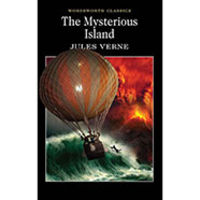
Jules Verne (1828-1905)
is internationally famous
as the author of a
distinctive series of
adventure stories
describing new travel
technologies which opened
up the world and provided
means to escape from it.
The collective enthusiasm
of generations of readers
of his 'extraordinary
voyages' was a key factor
in the rise of modern
science fiction. In The
Mysterious Island a group
of men escape
imprisonment during the
American Civil War by
stealing a balloon. Blown
across the world, they
are air-wrecked on a
remote desert island. In
a manner reminiscent of
Robinson Crusoe, the men
apply their scientific
knowledge and technical
skill to exploit the
island's bountiful
resources, eventually
constructing a
sophisticated society in
miniature. The book is
also an intriguing
mystery story, for the
island has a secret.
Availability: In Stock
£1.99
Available
-
Around the World in
Eighty Days (1873)
relates the hair-raising
journey made as a wager
by the Victorian
gentleman Phileas Fogg,
who succeeds - but only
just! - in circling the
globe within eighty days.
The dour Fogg's obsession
with his timetable is
complemented by the
dynamism and versatility
of his French manservant,
Passepartout, whose
talent for getting into
scrapes brings colour and
suspense to the race
against time. Five Weeks
in a Balloon (1863) was
Verne's first novel. It
documents an apocryphal
jaunt across the
continent of Africa in a
hydrogen balloon designed
by the omniscient,
imperturbable and ever
capable Dr Fergusson,
the prototype of the
Vernian adventurer.
Availability: In Stock
£1.99
Available
-
Tender is the Night is a
story set in the
hedonistic high society
of Europe durinthe
'Roaring Twenties'. A
wealthy schizophrenic,
Nicole Warren, falls in
love with Dick Diver -
her psychiatrist. The
resulting saga of the
Divers' troubled
marriage, and their
circle of friends,
includes a cast of
aristocratic and
beautiful people,
unhappy love affairs, a
duel, incest, and the
problems inherent in the
possession of great
wealth. Despite
cataloguing a maelstrom
of interpersonal
conflict, Tender is the
Night has a poignancy and
warmth that springs from
the quality of
Fitzgerald's writing and
the tragic personal
experiences on which the
novel is based. Six years
separate Tender is the
Night and The Last
Tycoon, the novel
Fitzgerald left
unfinished at his death
in December 194
Fitzgerald lived in
Hollywood more or less
continuously from July
1937 until his death,
and a novel about the
film industry at the
height of 'the studio
system' centred on the
working life of a top
producer was begun in
1939. Even in its
incomplete state The Last
Tycoon remains the
greatest American novel
about Hollywood and
contains some of
Fitzgerald's most
brilliant writing.
Availability: In Stock
£1.99
Available
-
Details: SECRETS,
SUSPENSE, AND
CONSPIRACY. LONDON
THROUGH THE EYES OF THE
GREAT SHERLOCK HOLMES As
Dr Watson's old
manuscripts,
deliberately unpublished
to protect the names of
those they concern, are
released into the public,
a multitude of
previously unseen cases
are revealed. An American
millionaire receives
threatening letters from
a sinister Black Hand.
..A mysterious box
terrifies a shop keeper.
..Holmes and Watson feel
the influence of an old
enemy from beyond the
grave.. .And a tragedy
occurs which Sherlock
Holmes will never be able
to forgive himself for
failing to prevent. From
the smoky streets of
London to a countryside
mental institution, the
renowned detective and
his faithful sidekick
Watson must use all their
cunning and skills to
solve this array of
mysteries. With murders,
madness and diamonds
abound, June Thomson
continues the Holmes
canon with a brilliance
and ingenuity that
perfectly captures where
Conan Doyle left off.
Ideal for: Fans of
Sherlock Holmes and for
those who enjoy
historical and mystery
fiction books. This
paperback book has 315
pages and measures: 19.8
x 12.8 x 2.2cm
Availability: In Stock
£1.99
Available
-
Father Brown, one of the
most quirkily genial and
lovable characters to
emerge from English
detective fiction, first
made his appearance in
The Innocence of Father
Brown in 1911. That first
collection of stories
established G.K.
Chesterton's kindly
cleric in the front rank
of eccentric sleuths.
This complete collection
contains all the
favourite Father Brown
stories, showing a quiet
wit and compassion that
has endeared him to many,
whilst solving his
mysteries by a mixture of
imagination and a
sympathetic worldliness
in a totally believable
manner.
Availability: In Stock
£1.99
Available
-
Details: He's
indisputably the greatest
writer in the English
language, a master of
every mood from
sidesplitting comedy
(Twelfth Night) to
profound tragedy (King
Lear) to the historically
majestic (Henry V). Every
bookshelf must have a
complete collection of
his 38 plays, his
magnificent and
passionate sonnets, and
his epic poems. Here they
all are in one 1,
024-page, yet compact
and low-cost hardcover,
sturdy enough to
withstand students poring
through its pages for
classes and exams;
theatergoers refreshing
their acquaintance with a
favorite play before
seeing it performed; and
literature lovers picking
it up again and again
simply for pleasure.
Every time you return to
Shakespeare's elegantly
phrased lines, and his
rich and complex
characters, you'll find
something new to
treasure. Illustrated
with Renaissance pictures
that capture the feel of
the Bard's era. Ideal
for: Fans of William
Shakespeare and fiction
novels. This hardback
book has 1023 pages and
measures: 21.9 x 15.3 x
5cm
Availability: In Stock
£7.99
Available
-
Details: 1915. The great
detective Sherlock Holmes
is retired and quietly
engaged in the study of
honey bees when a young
woman literally stumbles
into him on the Sussex
Downs. Fifteen years old,
gawky, egotistical,
and recently orphaned,
the young Mary Russell
displays an intellect to
impress even Sherlock
Holmes - and match him
wit for wit. Under his
reluctant tutelage, this
very modern
twentieth-century woman
proves a deft protegee
and a fitting partner for
the Victorian detective.
In their first case
together, they must
track down a kidnapped
American senator's
daughter and confront a
truly cunning adversary -
a bomber who has set
trip-wires for the
sleuths and who will stop
at nothing to end their
partnership. Ideal for:
Fans of mystery and
historical fiction books.
This paperback book has
440 pages and measures:
19.7 x 13 x 2.9cm
Availability: In Stock
£1.99
Available
-
This novel, based on
George Eliot's own
experiences of provincial
life, is a masterpiece
of ambiguity in which
moral choice is subjected
to the hypocrisy of the
Victorian age. As the
headstrong Maggie
Tulliver grows into
womanhood, the deep love
which she has for her
brother Tom turns into
conflict, because she
cannot reconcile his
bourgeois standards with
her own lively
intelligence. Maggie is
unable to adapt to her
community or break free
from it, and the result,
on more than one level,
is tragedy.
Availability: In Stock
£2.99
Available
-
'Who could read the
programme for the
excursion without longing
to make one of the
party?' So Mark Twain
acclaims his voyage from
New York City to Europe
and the Holy Land in June
1867. His adventures
produced The Innocents
Abroad, a book so funny
and provocative it made
him an international star
for the rest of his life.
He was making his first
responses to the Old
World - to Paris, Milan,
Florence, Venice,
Pompeii, Constantinople,
Sebastopol, Balaklava,
Damascus, Jerusalem,
Nazareth, and Bethlehem.
For the first time he was
seeing the great
paintings and sculptures
of the 'Old Masters'. He
responded with wonder and
amazement, but also with
exasperation,
irritation, disbelief.
Above all he displayed
the great energy of his
humour, more explosive
for us now than for his
beguiled contemporaries.
Availability: In Stock
£1.99
 Denmark