

 United Kingdom
 France
 Germany
 Netherlands
 Sweden
 USA
USA
 Italy
Italy
 Spain
Spain

Historical Biographies




Available
-
Melanie McGraths
critically acclaimed East
End family memoir now in
paperback. In this
remarkable book,
award-winning writer
Melanie McGrath has given
us a vivid and poignant
memoir of the East End.
McGrath spent years
wondering about her East
End roots. At the turn of
the twenty-first century
the places where her
grandparents lived out
their lives Poplar, East
Ham and Silvertown ? are
virtually unrecognisable;
her grandparents, Jenny
and Len Page, long since
dead and already half
forgotten. Silvertown
teems with stories of
life in the docks and
pubs and dog tracks of
the old East End where
Melanie McGrath's
grandparents scraped a
living. Here are the
bustling alleys and lanes
of Poplar in 1914, where
eleven year old Jenny
watches the men go off to
fight; the Moses
sweatshop on the Mile End
Waste; the London docks,
then the largest port in
the world; and Jenny
having her teeth pulled
out on her seventeenth
birthday. Here too is the
Cosy Caf?, opened full
of hope by Jenny and Len
? later a home to their
troubled marriage ? and
an East End landscape
which is altered forever
by the closure of the
docks and the
disintegration of this
close knit community. The
places Melanie McGrath
describes have largely
vanished now. This
evocative and deeply
moving family memoir
recreates the lost East
End and the struggles of
those who live there.
Availability: In Stock
£1.99
Available
-
'Once upon a time, when
New York City lived and
breathed, there was a
man marked for death,
like us all.. .' Arnold
Rothstein was one of the
most mysterious figures
in Manhattan's history: a
godfather of organized
crime - rumoured to have
fixed baseball's World
Series - yet a peer of
the Morgans and
Rockefellers. But one
night in 1928, he was
shot in the stomach and
died shortly afterwards,
refusing to speak a word
concerning his own
murder. Nick Tosches
jumps feet first into
Rothstein's life to lay
bare his legacy - to New
York and to the whole
Western world - and to
try and make some sense
of what the 'king of the
Jews' means to us. What
we get back is an angry
howl right out of the
tortured heart of America
itself.
Availability: In Stock
£1.99
Available
-
Details: This is the
autobiography of Jack
Straw - an MP for
thirty-three years and at
the heart of government
throughout the
longest-serving Labour
administration in
history. As a small boy
in Epping Forest, Jack
Straw could never have
imagined that one day he
would become Britain's
Lord Chancellor. As one
of five children of
divorced parents, he was
bright enough to get a
scholarship to a
direct-grant school, but
spent his holidays as a
plumbers' mate for his
uncles to bring in some
much-needed extra income.
Yet he spent 13 years and
11 days in government,
including long and
influential spells as
Home Secretary and
Foreign Secretary. This
is the story of how he
got there. His memoirs
offer a unique insight
into the complex,
sometimes self-serving
but always fascinating
world of British politics
and reveals the toll that
high office takes, but,
more importantly, the
enormous satisfaction and
extraordinary privilege
of serving both your
constituents and your
country. Straw's has been
a very public life, but
he reveals the private
face, too and offers
readers a vivid and
authoritative insight
into the Blair/Brown era
and, indeed, the last
forty years of British
politics. Ideal for:
Those who have followed
Jack Straw's career and
people with interest in
politicians. This
paperback book has 582
pages and measures: 23.3
x 15.2 x 4.5cm
Availability: In Stock
£1.99
Available
-
Imagine you are an RAF
torpedo pilot in World
War Two, sent on
missions so dangerous
that you're later likened
to the Kamikaze. Suicide
wasn't a recognised part
of the objective for
British airmen, yet some
pilots felt they had
accepted certain death
just by climbing into
their cockpits. There
were times in 1942 when
Arthur Aldridge felt like
this. At the age of 19,
this courageous young man
had quit his studies at
Oxford to volunteer for
the RAF. He flew his
Bristol Beaufort like
there was no tomorrow - a
realistic assumption,
after seeing his best
friend die in flames at
the end of 1941. Aldridge
was awarded a DFC
(Distinguished Flying
Cross) for his bravery on
the same strike on a
German cargo ship during
which he lost a wing tip
by flying too close to
the deck. He was equally
lucky to survive his
squadron's chaotic
torpedo attack on the
giants of Hitler's
maritime fleet during the
notorious Channel Dash.
As 1942 wore on, and the
stress became
intolerable, Aldridge
and his Cockney gunner
Bill Carroll held their
nerve, and 'Arty' was
awarded a Bar to his DFC
for sinking two enemy
ships off Malta and
rescuing a fellow pilot
while wounded. Malta was
saved by the skin of its
teeth, Rommel denied
vital supplies in North
Africa, and the course
of the war was turned.
Aldridge was still only
21 years old. Now both
91, but firm friends as
ever, Aldridge and
Carroll are two of the
last torpedo airmen who
deserve their place in
history alongside our
heroic Spitfire pilots.
Their story vividly
captures the comradeship
that existed between men
pushed by war to their
very limit.
Availability: In Stock
£5.99
Available
-
Details: The Sunday Times
bestseller From the
bestselling authors of
The Sugar Girls, G.I.
Brides weaves together
the real-life stories of
four women who crossed
the ocean for love,
providing a moving true
tale of romance and
resilience. The ?friendly
invasion? of Britain by
over a million American
G.I.s caused a sensation
amongst a generation of
young women deprived of
male company during the
Second World War. With
their exotic accents,
smart uniforms and aura
of Hollywood glamour,
the G.I.s soon had the
local girls queuing up
for a date, and the
British boys off fighting
abroad turning green with
envy. But American
soldiers offered
something even more
tantalising than a ready
supply of chocolate,
chewing gum and nylon
stockings. Becoming a
G.I. bride provided an
escape route from
Blitz-ravaged Britain,
an opportunity for a
whole new life in America
? a country that was more
affluent, more modern
and less class-ridden
than home. Some 70, 000
G.I. brides crossed the
Atlantic at the end of
the war to join the men
who had captured their
hearts ? but the long
voyage was just the
beginning of a much
bigger journey. Once
there, the women would
have to adapt to a
foreign culture and a new
way of life thousands of
miles away from family
and friends, with a man
they hardly knew out of
uniform. Some struggled
with the isolation of
life in rural America,
or found their heroic
soldier was less
appealing once he
returned to Civvy Street.
But most persevered,
determined to turn their
wartime romance into a
lifelong love affair,
and prove to those back
home that it really was
possible to have a
Hollywood ending. Ideal
for: Readers who enjoy
war time stories. This
paperback book has 361
pages and measures: 19.7
x 12.8 x 2.8cm
Availability: In Stock
£1.99
Available
-
Details: May Smith is
twenty-four at the
outbreak of World War
Two; at night, the
sirens wail, and the
young men of the village
leave to fight. But
still, ordinary life
goes on: May goes
shopping, plays tennis,
takes holidays and even
falls in love - while
recording it faithfully
in her diary.May is
simply a joy, a bright
spark in dark times The
Times. Ideal For: This
book is ideal for anyone
who likes traditional
fiction books.
Availability: In Stock
£2.99
Available
-
A Night To Remember
Martin Jarvis reads
Walter Lords definitive
account of the sinking of
the Titanic, compiled
from his own interviews
with eyewitnesses Eleven
storeys high, a sixth of
a mile long and a list of
passengers collectively
worth 250 million
dollars...On the 10th
April 1912 the unsinkable
Titanic left Southampton
on her maiden voyage to
New York. At 11.40pm on
the 14th April, the
Titanic collided with an
iceberg and was lost. 1,
500 people died in the
freezing sea. Legends and
stories grew and even now
the whole affair still
sends shivers down the
spine. First published in
1956 and born of 20 years
research, this account
of the voyage and its
aftermath is a classic of
detailed investigation.
Availability: In Stock
£4.99
Available
-
Details: After nearly 20
years of SAS operations,
including a never before
published role in the
infamous Bravo Two Zero
patrol, Bob retired from
the military to work as
an advisor on the
international commercial
security circuit. Certain
his most dangerous days
were behind him, Bob
settled into a sedate
life looking after VIPs.
Then 9/11 happened. Bob
found himself back in war
zones on assignments far
more perilous than
anything he had
encountered in the SAS:
from ferrying journalists
across firing lines in
The West Bank and Gaza to
travelling to the heart
of Osama bin Ladens
Afghan lair. As part of a
two-man team, Bob
searched for ITN
Correspondent Terry
Lloyds missing crew
in Basra, Iraq, while
in Afghanistan he was
forced to spend the night
as the only Westerner in
Khost ? with a $25, 000
bounty on his head. As
the War on Terror
escalated, Bob contended
with increasingly
sophisticated insurgents.
But the most disturbing
development he witnessed
was much closer to home:
The Circuits rise
from a niche business
staffed by top veterans
into an unregulated,
billion dollar industry
that too often places
profits above lives. This
is a pulse-racing and at
times shocking testament
to what is really
happening, on the
ground, in the major
trouble spots of the
world. Ideal for: People
with an interested in
life inside a war zone
and the SAS. This
paperback book has 346
pages and measures: 20 x
13 x 2.5cm
Availability: In Stock
£2.99
Available
-
The Irish have left an
indelible mark in the
most hostile territory on
earth, Antarctica. It
was the Irish who
pioneered a route to the
Antarctic and whose
adventures 100 years ago
gripped the attention of
the world. Their
contribution is now told
in a single volume
celebrating their amazing
exploits. The earliest
voyages to the Antarctic
ice are saluted with due
consideration given to
present-day adventurers
who have taken up the
torch."ations from
first-hand accounts,
photographs of the
intrepid men, relics,
medals, and sites
enhance the poignant
text. Explorers included
are: * Cork-born
Bransfield, Forde and
Keohane as well as the
only pair of brothers to
explore the Antarctic,
the McCarthys from
Kinsale. * Banbridge man,
Francis Crozier * Ernest
Shackleton from Kildare *
Kerryman Tom Crean. *
Mike Barry from Kerry,
the first Irishman to
walk to the South Pole *
Clare O'Leary, from
Bandon, the first
Irishwoman to do so *
Mark Pollock, from Down,
was the first blind
person to trek to the
pole. The great Amundsen
wrote Shackleton's name
would 'for evermore be
engraved with letters of
fire in the history of
Antarctic exploration'.
He might well have been
speaking of Ireland.
Availability: In Stock
£8.99
Available
-
Recently a long-lost
notebook belonging to
Dracula author, Bram
Stoker, was discovered
in the attic of one of
his great grandsons.
Published to coincide
with the centenary of
Stoker's death the text
of this notebook,
written between 1871 and
1881 mostly in his native
Dublin, will captivate
scholars of Gothic
literature and Dracula
fans alike. Painstakingly
transcribed and
researched, the entries
offer intriguing new
insights into the complex
nature of the man who
wrote Dracula more than
one hundred years ago.
Assisted by a team of
Dracula scholars and
Stoker historians, Dacre
Stoker and Dr Elizabeth
Miller neatly connect the
dots between contents of
the Notebook and Bram
Stoker's later work,
most significantly
Dracula.
Availability: In Stock
£3.99
Available
-
This third and final
volume of memoirs
completes a major work of
contemporary history and
a brilliantly told
narrative full of
startling insights,
candour and a sweeping
sense of history. It
begins with the
resignation of Nixon -
including Kissinger's
final assessment of
Nixon's tortured
personality and the
self-inflicted tragedy
that ended his
presidency, making
Kissinger, for a time,
the most powerful man in
American government. This
book abounds in crisis -
Vietnam, Watergate, the
Cold War. Here are
brilliant scenes, as
only an insider could
write them, of the
high-level meetings that
shaped American foreign
policy, the famous
'shuttle' diplomacy by
which Kissinger succeeded
in bringing a reluctant
and wary Rabin and
anxious Sadat together to
begin to return of the
Sinai to Egypt and the
SALT talks with the
Soviet Union that began
the process of nuclear
limitation. Here also are
intimate and profound
portraits of world
leaders from Mao,
teasing Kissinger while
displaying a poetic
wisdom, to Brezhnev at
the Vladivostock summit,
confused, ill-prepared,
unwell, desperately to
conceal the Soviet
Union's difficulties with
a screen of blustering
bravado.
Availability: In Stock
£3.99
Available
-
A newly edited,
single-volume
commemorative edition of
?The Path to Power? and
?The Downing Street
Years?; this is Margaret
Thatcher in her own
words. Margaret Thatcher
was the towering figure
of late-twentieth-century
British politics. Now
following her death in
2013, this is her own
account of her remarkable
life. Beginning with her
upbringing in Grantham,
she goes on to describe
her entry into
Parliament. Rising
through the ranks of this
mans world, she
led the Conservative
Party to victory in 1979,
becoming Britain's first
woman prime minister.
Offering a riveting
firsthand version of the
critical moments of her
premiership ? the
Falklands War, the
miners' strike, the
Brighton bomb and her
unprecedented three
election victories, the
book reaches a gripping
climax with an
hour-by-hour description
of her dramatic final
days in 10 Downing
Street. Margaret
Thatcher's frank and
compelling autobiography
stands as a powerful
testament to her
influential legacy.
Availability: In Stock
£10.99
Available
-
Vincent van Gogh created
some of the best loved -
and most expensive -
works of art ever made,
from the early The Potato
Eaters to his late
masterpieces Sunflowers
and The Starry Night. He
had worked as an art
dealer, a missionary and
as a teacher in England,
and only in his late
twenties did he begin a
life that would be
fundamental in shaping
modern art. But when he
died in Auvers-sur-Oise
in 1890 at the age of
thirty-seven he was
largely unknown. Written
with the cooperation of
the Van Gogh Museum,
Pulitzer-winning authors
Steven Naifeh and Gregory
White Smith recreate his
extraordinary life, and
the inside of his
troubled mind, like
never before - and they
put forward an explosive
new theory challenging
the widespread belief
that Van Gogh took his
own life. Drawing for the
first time on all of his
(and his family's)
extensive letters, which
offer exquisite glimpses
into his thoughts and
feelings, this is the
definitive portrait of
one of the world's
cultural giants.
Availability: In Stock
£6.99
Available
-
Against the monumental
canvas of seventeenth-
and eighteenth-century
Europe and Russia,
unfolds the magnificent
story of Peter the Great,
crowned at the age of
10. A barbarous,
volatile feudal tsar with
a taste for torture; a
progressive and
enlightened reformer of
government and science; a
statesman of vision and
colossal significance:
Peter the Great embodied
the greatest strengths
and weaknesses of Russia
while being at the very
forefront of her
development. Robert K.
Massie delves deep into
the life of this
captivating historical
figure, chronicling the
pivotal events that
shaped a boy into a
legend - including his
'incognito' travels in
Europe, his unquenchable
curiosity about Western
ways, his obsession with
the sea and establishment
of the stupendous Russian
navy, his creation of an
unbeatable army, and his
relationships with those
he loved most: Catherine,
his loving mistress,
wife, and successor; and
Menshikov, the charming,
unscrupulous prince who
rose to power through
Peter's friendship.
Impetuous and stubborn,
generous and cruel, a
man of enormous energy
and complexity, Peter
the Great is brought
fully to life.
Availability: In Stock
£23.49
Available
-
Her central themes are
the classics,
universities and teaching
- and much else besides.
In this second collection
following on from the
success of It's a Don's
Life, Beard ponders
whether Gaddafi's home is
Roman or not, we share
her 'terror of
humiliation' as she
enters 'hairdresser
country' and follow her
dilemma as she wanders
through the quandary of
illegible handwriting on
examination papers and
'longing for the next
dyslexic' - on whose
paper the answers are
typed, not handwritten.
Praise for It's a Don's
Life'Delightful.. . it
has the virtues of
brevity, eclecticism and
learning worn lightly.. .
if they'd had Mary Beard
on their side back then,
the Romans would still
have their empire' Daily
Availability: In Stock
£2.99
Available
-
The daughter of an
impoverished aristocrat,
Catherine was married
aged 16 to Grand Duke
Peter, heir to the
throne of all the
Russias, a feckless
teenager with a weakness
for drink. Catherine was
only able to give him an
heir by passing off her
lover's son as his own.
In 1762, Catherine rode
out of St Petersburg at
the head of an army to
arrest her husband. Three
months later she became
sole empress of the
largest empire on earth.
She was 33 years old. She
ruled Russia as a
benevolent autocrat for
34 years, fighting the
Turks abroad and
rebellion at home, and
shepherding her people
through the upheavals of
the French Revolution.
She took on many lovers
but gave her heart to
General Potemkin, the
foremost statesman of her
time. She died in 1796
aged 67, revered by her
people as 'our mother',
praised by Voltaire as a
philosopher, reviled by
her enemies as the
Messalina of the North
and remembered in history
as Catherine the Great.
From this extraordinary
life of great events,
fabulous splendour and
barbaric cruelty, Robert
K. Massie has woven a
thrilling narrative based
on impeccable scholarship
and a cinematic eye for
detail.
Availability: In Stock
£5.99
Available
-
This is almost all of
what survives of a
journal Colin Perry kept
between March and
November 1940, when he
was eighteen years old,
written in his home in
Tooting and in the City
of London where he
worked. The journal was
never intended for
publication, it is only
the youthful, untrained
outpourings of a proud
and totally insignificant
Londoner. It spans what
the Air Ministry was to
call '...the Great Days
from 8 August - 31
October 1940' and the
fifty-seven nights when
the bombing of London was
unceasing. This is the
period enshrined in our
history as the Battle of
Britain, the most
momentous year for
Britain in the twentieth
century. Includes 70
Photographs
Availability: In Stock
£2.99
Available
-
Details: BBC RADIO 4 BOOK
OF THE WEEK SHORTLISTED
FOR THE ORWELL PRIZE 2012
SHORTLISTED FOR THE CRIME
WRITERS ASSOCIATION
NON-FICTION DAGGER AWARD
?THE MOST IMPORTANT CRIME
STORY OF THE DECADE?
Scottish Mail Manchester.
London. Glasgow. In the
summer of 2011 violence
erupted in our inner
cities and many blamed
gang culture. But is the
truth so simple? Hood Rat
tells the human stories
that the media miss: of
young men who have fallen
through the system, and
of one young woman with a
vision for change.
?Unflinching. It
penetrates environments
that most of us only ever
glimpse? Observer
?Impressive. Knight
uncovers the sort of
stories that never make
the news? Scotsman ?This
British sensation is a
must. Disturbingly
compelling? Marie Claire
?A gripping novelistic
immersion in the lives of
young criminals? Louis
Theroux ?The British
Wire? BBC Radio 5 Live
Ideal for: A must-read
for anyone who wants to
understand our deeply
fractured society. highly
recommend this book for
anyone studying
criminology, social
sciences, psychology,
law or employed in prison
services, the police
force, social services,
Youth offending teams,
justice systems. This
paperback book has 293
pages and measures: 20 x
13 x 2.2cm
Availability: In Stock
£2.99
Available
-
Thanks to Shakespeare,
the name Macbeth has
become a byword for
political ambition
realised by bloody
violence. Fiona Watson
has uncovered, buried
beneath the layers of
myth, a history that is
entirely different from,
but just as extraordinary
as, that recounted by
Shakespeare. As ruler of
Alba (Scotland) Macbeth
sat on one of the
longest-established
thrones in Western
Europe. It is true that
he killed Duncan, the
previous king, but this
was the normal, if
brutal, method of regime
change in Dark Age
Scotland. The reality is
that Macbeth quickly
established himself as an
effective and popular
ruler. As a Celtic
warrior-king, he was
responsible for the
maintenance of his
people's dominance of
northern Britain. A
friend to the Church and
valiant protector of his
people, the real Macbeth
epitomised the
contemporary model of
vigorous medieval
kingship. His fascinating
story, long overdue in
the telling, is done
full justice in Fiona
Watson's authoritative
and compelling narrative.
Availability: In Stock
£2.99
Available
-
15th April 1912 - a date
that shook the western
world - the day the great
ship, the Titanic,
sank, over 1, 500 people
drowned, a catastrophe
so awful and so
unexpected that it
continues to fascinate
and haunt us today. 31st
May 2011 was the 100th
anniversary of the launch
of the Titanic. Thousands
of people gathered in
Belfast at advantage
points including the top
of the Albert Clock to
witness the launch of
ship number 401 at 13
minutes past noon. In
"Titanic - Belfast's
Own", Stephen Cameron
looks at this most famous
of ships from a new
perspective. He tells of
the conception and birth
of SS 401, as she was
known in the yard.
Extensively illustrated,
and packed with detailed
information on her early
days, this is the story
of bringing a dream to
life. So ambitious was
this dream that men were
to die before ever the
ship was launched. But
even when she had left
Ulster's shores to sail
to Southampton on the
first leg of her fateful
voyage, the Titanic had
not finished with the
people of Ulster. In a
gripping and
heart-rending chapter
Stephen Cameron writes of
Ulster people who sailed
with the mighty ship. For
many it was to be their
last journey, as the
dream turned to nightmare
and the glory to pain.
This new, revised and
updated edition is
available to accompany
Stephen's new
publication: "Belfast
Shipbuilders - A Titanic
Tale", 9781906578787.
Availability: In Stock
£11.99
Available
-
Here comes a delicious
tale of secrets,
betrayal and forbidden
love. After a separation
of many years, Emily
Fido Faithfull bumps into
her old friend Helen
Codrington on the streets
of Victorian London. Much
has changed: Helen is
more and more unhappy in
her marriage to the older
Vice-Admiral Codrington,
while Fido has become a
successful woman of
business and a pioneer in
the British Womens
Movement. But, for all
her independence of mind,
Fido is too trusting of
her once-dear companion
and finds herself drawn
into aiding Helens
obsessive affair with a
young army officer. When
the Vice-Admiral seizes
the children and sues for
divorce, the womens
friendship unravels amid
accusations of adultery
and counter-accusations
of cruelty and attempted
rape, as well as a
mysterious sealed letter
that could destroy more
than one life...Based on
blow-by-blow newspaper
reports of the 1864
Codrington Divorce,
"The Sealed
Letter", full of
sparkling characters and
wicked dialogue, is a
thought-provoking mystery
and gripping drama of
friends, lovers and
marriage.
Availability: In Stock
£1.99
Available
-
From one of the world's
most admired women, this
is former National
Security Advisor and
Secretary of State
Condoleezza Rice's
compelling story of eight
years serving at the
highest levels of
government. A native of
Birmingham, Alabama who
overcame the racism of
the Civil Rights era to
become a brilliant
academic and expert on
foreign affairs, Rice
distinguished herself as
an advisor to George W.
Bush during the 2000
presidential campaign.
Once Bush was elected,
she served as his chief
adviser on
national-security issues
- a job whose duties
included harmonizing the
relationship between the
Secretaries of State and
Defense. It was a role
that deepened her bond
with the President and
ultimately made her one
of his closest
confidantes. With the
September 11, 2001,
terrorist attacks, Rice
found herself at the
center of the
Administration's intense
efforts to keep America
safe. Here, Rice
describes the events of
that harrowing day - and
the tumultuous days
after. No day was ever
the same. Surprisingly
candid in her appraisals
of various Administration
colleagues and the
hundreds of foreign
leaders with whom she
dealt, Rice also offers
here keen insight into
how history actually
proceeds. In No Higher
Honor, she delivers a
master class in
statecraft -- but always
in a way that reveals her
essential warmth and
humility, and her deep
reverence for the ideals
on which America was
founded.
Availability: In Stock
£3.99
Available
-
An extraordinary memoir
from a man in his
nineties who remembers
everyday life in a North
London now long gone: the
hardships and
deprivations of a life of
poverty but also the
resourcefulness and
fortitude of a community
determined to survive
between the wars. 'When I
look back, I can picture
the old gels chinwagging
on their steps in the Bay
like it was yesterday.
Little did they think
that young Sid, passing
by with his arse out of
his trousers, would one
way publish his memoirs!'
'Ordinary' people do not
write their stories,
believing their lives to
be unremarkable. Some,
like Sid, cannot write
at all. But, with the
aid of his granddaughter
Helen Day, Sid has
produced an extraordinary
memoir of a city and a
way of life now lost
forever. ?London Born? is
a book that has appeared
against all the odds ? as
Sid says, 'When me
granddaughter Helen Day
said she wanted to record
the story of the first
half of me life and turn
it into a book I was
astonished. I thought to
meself, Well, I've done
a lot of things, but I
never dreamt I'd get into
the book game. You see,
I can't write more than
me own name.' In ?London
Born?, Sid remembers the
city that emerged from
the First World War and
recreates the daily life
of the people living in
the notorious street
known as 'Tiger Bay'. He
describes the drinking
and merrymaking, the
poverty and unemployment
? and the 'villainry'.
With relish he relates
how youthful high spirits
and a refusal to accept
the hardship of the times
sometimes put him and his
friends on the wrong side
of the law. He goes on to
tell of the wartime
mayhem endured by
Londoners and his
determination to survive.
His story closes with
demobilisation when he
returns to his wife and
young family ? 'the only
thing that ever counted'.
This is a memoir from a
warm and cheeky voice;
from someone who
remembers, as if it were
yesterday, parading down
Archway in his fifty-bob
suit, or running rings
around Ernie Costen, the
local policeman.
Availability: In Stock
£1.99
Available
-
Details: Experience World
War 2 as portrayed b Nazi
propaganda magazine
signal and contrast it
with what really happened
between 1939 and 1945.
This book put the Signal
story into its factual
context, showing how
Signal played a
significant part in
stiffening Nazi
resistance as the war
progressed. Ideal for:
History enthusiast and
people with an interest
in World Wars. This
hardback book has 224
pages and measures: 28.9
x 22.5 x 2.5cm
Availability: In Stock
£7.99
Available
-
Outrageous, ingenious
and indomitable, Teresa
Cornelys was a unique
figure in 18th century
Europe whose private life
and professional dealings
scandalized society. A
Venetian opera singer and
adventuress, she arrived
in England in 1759,
leaving a trail of debts
and lovers across Europe.
She was 36 years old,
destitute and the mother
of Casanova's child.
Within months, she had
acquired one of the
finest mansions in
London's West End -
Carlisle House, Soho
Square - where she
successfully launched the
captital's first
night-club. For two
decades her extravagant
concerts, balls and
masquerades were
frequented by royalty,
aristocrats and
politicians. She defied
conventional morality,
the law, the limitations
of her sex, and even old
age.
Availability: In Stock
£1.99
Available
-
The worst storm in
history seen from the
wheelhouse of a doomed
fishing trawler; a
mesmerisingly vivid
account of a natural hell
from a perspective that
offers no escape. The
'perfect storm' is a
once-in-a-hundred-years
combination: a high
pressure system from the
Great Lakes, running
into storm winds over an
Atlantic island -- Sable
Island -- and colliding
with a weather system
from the Caribbean:
Hurricane Grace. This is
the story of that storm,
told through the accounts
of individual fishing
boats caught up in the
maelstrom, their
families waiting
anxiously for news of
their return, the rescue
services scrambled to
save them. It is the
story of the old battle
between the fisherman and
the sea, between man and
Nature, that awesome and
capricious power which
can transform the surface
of the Atlantic into an
impossible tumult of
water walls and gaping
voids, with the capacity
to break an oil tanker in
two. In spare, lyrical
prose 'The Perfect Storm'
describes what happened
when the Andrea Gail
looked into the wrathful
face of the perfect
storm.
Availability: In Stock
£1.99
Available
-
A fascinating family
memoir from Joseph
O'Neill, author of the
Man Booker Prize
longlisted and Richard &
Judy pick, 'Netherland'.
Joseph O'Neill's
grandfathers - one Irish,
one Turkish - were both
imprisoned during the
Second World War. The
Irish grandfather, a
handsome rogue from a
family of small farmers,
was an active member of
the IRA and was interned
with hundreds of his
comrades. O'Neill's other
grandfather, a hotelier
from a tiny and
threatened Turkish
Christian minority, was
imprisoned by the British
in Palestine, on
suspicion of being a spy.
At the age of thirty,
Joseph O'Neill set out to
uncover his grandfather's
stories, what emerges is
a narrative of two
families and two
charismatic but flawed
men - it is a story of
murder, espionage,
paranoia and fear, of
memories of violence and
of fierce commitments to
political causes.
Availability: In Stock
£1.99
Available
-
A heart-warming memoir
about life as a nursery
nurse and nanny in the
1960s, for fans of Call
the Midwife. In 1961,
sixteen year-old Pam
Weaver began her training
as a nursery nurse. Drawn
to this profession by her
caring nature and a
desire to earn her own
living, Pam had no idea
of the road she was about
to start down. At the
government-run nursery,
she found early mornings,
endless floors to scrub,
overbearing matrons,
heartbreaking stories of
abandonment, true
friends and life lessons
that would stay with her
for decades. Bath Times
and Nursery Rhymes is
Pams memoir about
her time in state
nurseries and as a Hyde
Park private nanny. It
will recount the highs
and lows of that time
with engaging and
uplifting honesty.
Availability: In Stock
£2.99
Available
-
Details: Deadly
Derbyshire is a guide to
murder and manslaughter
committed across the full
extent of the county,
from the murder of Hannah
Hewitt in 1742 to John
Cotton's killing in 1898.
In between, read about
the 'fiery' circumstances
of the death of John
McMorrow, a farm tragedy
at Stoney Houghton,
killings for 'pittances':
three eggs and a
sixpence; also discover
unprovoked and wicked
deeds as well as numerous
suspicious deaths. The
book is based on
extensive research of
newspaper archives,
uncovering a large number
of cases never previously
explored. Ideal for: An
interesting book for
those with an inquisitive
mind. This paperback book
has 168 pages and
measures: 23.6 x 15.6 x
1.2cm.
Availability: In Stock
£5.99
Available
-
Details: Douglas Haig is
the single most
controversial general in
British history. In 1918,
after his armies had won
the First World War, he
was feted as a saviour.
But within twenty years
his reputation was in
ruins, and it has never
recovered. In this
fascinating biography,
Professor Gary Sheffield
reassesses Haigs
reputation, assessing
his critical role in
preparing the army for
war. Ideal for: A great
historical biography
bringing showcasing a
fascinating life. This
paperback book has 462
pages and measures: 19.8
x 13 x 3cm.
Availability: In Stock
£3.99
Available
-
Details: One hundred
years have passed since
Robert Falcon
Scotts beleagured
expeditionary team
arrived at the South
Pole, only to find that
they had been beaten by
the Norwegian explorer
Roald Amundsen. The most
feted explorer of his
generation, Amundsen
counted the discovery of
the Northwest Passage,
in 1905, as well as the
North Pole amongst his
greatest achievements. In
the golden age of polar
exploration Amundsen,
whose revolutionary
approach to technology
transcends polar and
nautical significance,
was a titan among men.
However, until now, his
story has rarely featured
as more than a footnote
to Scotts tragic
failure. Reviled for
defeating Scott but
worshipped by his men,
Amundsen was pursued by
women and creditors
throughout his life
before disappearing on a
rescue mission for the
Italian Fascist who had
set off in an airship to
claim the North Pole for
Mussolini. The Last
Viking is the life of a
visionary and a showman,
who brought the era of
Shackleton to an end,
put the newly independent
Norway on the map and was
the twentieth
centurys brightest
trailblazing explorer.
Ideal for: A mesmerising
story that provides a
wonderful read for all.
This hardback book has
357 pages and measures:
24 x 16 x 3.5cm.
Availability: In Stock
£5.99
Available
-
In the early hours of 15
April 1912, after the
majestic liner Titanic
had split apart and the
1, 500 men, women and
children struggled to
stay alive in the
freezing Atlantic, the
sea was alive with the
sound of screaming. Then,
as the ship sank to the
ocean floor and the
passengers slowly died
from hypothermia, a
deathly silence settled
over the sea. Yet the
echoes of that night
reverberated through the
lives of each of the 705
survivors. Shadow of the
Titanic tells the
extraordinary stories of
some of those who
survived. Although we
think we know the story
of the Titanic - the
famously unsinkable ship
that hit an iceberg on
its maiden voyage from
Britain to America in
April 1912 - little has
been written about what
happened to the survivors
after the tragedy. How
did the loss of the ship
shape the lives of the
people who survived? How
did those who were saved
feel about those who
perished? And how did
they remember that
terrible night, in
effect a disaster that
has been likened to the
destruction of a small
town? Timed to coincide
with the 100th
anniversary of the
sinking, Shadow of the
Titanic sheds new light
on this enduringly
fascinating story, by
showing how the disaster
continued to shape the
lives of a cross-section
of passengers who escaped
the sinking ship.
Availability: In Stock
£2.99
Available
-
In the first part of this
famous work, published
in 1821 but then revised
and expanded in 1856, De
Quincey vividly describes
a number of experiences
during his boyhood which
he implies laid the
foundations for his later
life of helpless drug
addiction. The second
part consists of his
remarkable account of the
pleasures and pains of
opium, ostensibly
offered as a muted
apology for the course
his life had taken but
often reading like a
celebration of it. The
Confessions of an English
Opium-Eater is thus both
a classic of English
autobiographical writing
- the prose equivalent,
in its own time, of
Wordsworth's The Prelude
or Growth of a Poet's
Mind - and at the same
time a crucial text in
the long history of the
Western World's
ambivalent relationship
with hard drugs. Full of
psychological insight and
colourful descriptive
writing, it surprised
and fascinated De
Quincey's contemporaries
and has continued to
exert its powerful and
eccentric appeal ever
since.
Availability: In Stock
£2.99
Available
-
The inspiration for the
BBC series of the same
name Fresh out of Glasgow
Veterinary College, to
the young James Herriot
1930s Yorkshire seems to
offers an idyllic pocket
of rural life in a
rapidly changing world.
But from his erratic new
colleagues, brothers
Siegfried and Tristan
Farnon, to
incomprehensible farmers,
herds of semi-feral
cattle, a pig called
Nugent and an overweight
Pekingese called Tricki
Woo, James find he is on
a learning curve as steep
as the hills around him.
And when he meets Helen,
the beautiful daughter of
a local farmer, all the
training and experience
in the world can?t help
him? Since they were
first published, James
Herriots memoirs
have sold millions of
copies and entranced
generations of animal
lovers. Charming, funny
and touching, All
Creatures Great and Small
is a heart-warming story
of determination, love
and companionship from
one of Britains
best-loved authors.
Availability: In Stock
£2.99
Available
-
Details: In this
compelling new study of
the disastrous 1940
campaign in France and
Flanders, Matthew
Richardson reconstructs
in vivid detail the
British army's defeat as
it was experienced by the
soldiers of a single
battalion, the 2nd/5th
Leicesters. These men
typified the
ill-equipped,
under-trained British
battalions that faced the
blitzkrieg and the might
of Hitler's legions. They
were thrown into a series
of desperate, one-sided
engagements that resulted
in a humiliating retreat,
then evacuation from
Dunkirk. This is their
story. Matthew Richardson
is curator of social
history at Manx National
Heritage and was formerly
assistant keeper of the
Liddle Collection at the
University of Leeds. He
has a long-term interest
in military history and
research, focusing in
particular on the First
and Second World Wars and
on the history of the
Leicestershire Regiment.
In addition to writing
many magazine articles on
military history, he has
published the following
books: The Tigers and
Fighting Tigers. He is
currently working on
1914: Clash of Empires.
Ideal for: People with an
interest in military
history and the 2nd/5th
Leicesters. This hardback
book has 138 pages and
measures: 24 x 16 x 2cm
Availability: In Stock
£5.99
Available
-
In Kenya's 'Happy Valley'
no one paid too much
attention to the
privileged colonial set
as they farmed their
estates, partied until
dawn and indulged in
extra-marital affairs.
Not until Josslyn Hay,
Earl of Erroll, was shot
dead at the wheel of his
Buick in the early hours
of 24 January 1941. Some
said the good-looking
womaniser had it coming.
He was a philanderer who
could have had any number
of enemies who wanted
revenge. Ageing Jock
Delves Broughton stood
trial for Erroll's murder
but was acquitted and the
mystery remained unsolved
- until now. American
heiress Alice de Janze
had been conducting a
clandestine affair with
Joss for years. Married
into French aristocracy,
her stunning beauty was
to prove a fatal lure to
men of adventure.
Previously tried by a
French court for shooting
one of her lovers,
scandal followed her
wherever she went. She
arrived in Kenya as a
newly married Countess in
the 1920s, but by 1941
she had turned forty and
the years of partying had
taken their toll. Pushed
aside by Erroll for
younger lovers, Alice
was thrown into
desperation, resulting
in Errol's murder and her
own tragic demise. The
Temptress not only solves
the mystery of Josslyn
Hay's murder with the
utmost conviction - it
eloquently paints a
portrait of a volatile,
captivating woman.
Availability: In Stock
£3.99
Available
-
Details: Samuel Morton
Peto was one of the
giants of Victorian
Britain who left behind
an impressive legacy,
evidence of which can
still be seen today. Born
in 1809, he was an
inspired entrepreneur who
was, perhaps more than
any other individual,
responsible for
establishing Britain's
path to industrial
capitalism. An active
Member of Parliament, he
was one of the most
energetic pioneers of
Free Trade and a new
industrial, social
order. To achieve this
avant-garde vision, he
borrowed and built
everything from railways,
docks, and harbours to
factory towns, dormitory
towns, Baptist chapels,
dance halls and holiday
resorts. Amongst his many
famous projects were the
Lyceum theatre,
Hungerford Market, and
Nelson's Column in
London, along with
several sections of the
Great Western Railway,
Curzon Street station in
Birmingham, and the
London, Chatham & Dover
Railway. He was declared
bankrupt in 1868 and
exiled himself to
Budapest, before
returning to England and
dying in obscurity in
1889. This biography is
the fruit of many years
of research by author
Adrian Vaughan, and
includes the extensive
study of the Peto family
archives and rare
letters. Ideal for: An
excellent work
chronicling the life of
an amazing talent, this
is one book that every
historian will be proud
to own. This hardback
book has 192 pages and
measures: 23.7 x 16 x
2cm.
Availability: In Stock
£3.99
Available
-
The extraordinary story
of the deserters of the
Second World War. What
made them run? And what
happened after they fled?
During the Second World
War, the British lost
100, 000 troops to
desertion, and the
Americans 40, 000.
Commonwealth forces from
Canada, Australia, New
Zealand, South Africa
and Britain's colonial
empire also left the
ranks in their thousands.
The overwhelming majority
of deserters from all
armies were front-line
infantry troops; without
them, the war was harder
to win. Many of these men
were captured and court
martialled, while others
were never apprehended.
Some remain wanted to
this day. Why did these
men decide to flee their
ranks? In 'Deserter',
veteran reporter and
historian Charles Glass
follows a group of
British and American
deserters into the heat
of battle and explores
what motivated them to
take their fateful
decision to run away. The
result is a highly
emotional and engaging
study of an
under-explored area of
World War II history.
Availability: In Stock
£5.99
Available
-
The Number One
best-selling, epic
true-life story of one of
the most notorious
maritime disasters of the
19th century,
beautifully reissued. The
sinking of the whaleship
Essex by an enraged
spermwhale in the Pacific
in November 1820 set in
motion one of the most
dramatic sea stories of
all time: the twenty
sailors who survived the
wreck took to three small
boats (one of which was
again attacked by a
whale) and only eight of
them survived their
subsequent 90-day ordeal,
after resorting to
cannibalising their
mates. Three months after
the Essex was broken up,
the whaleship Dauphin,
cruising off the coast of
South America, spotted a
small boat in the open
ocean. As they pulled
alongside they saw piles
of bones in the bottom of
the boat, at least two
skeletons' worth, with
two survivors -- almost
skeletons themselves --
sucking the marrow from
the bones of their dead
ship-mates.
Availability: In Stock
£1.99
Available
-
Details: In the 1940s,
nearly a quarter of a
million East Londoners
decamped annually for the
hopfields of Kent. Most
of the pickers were
women, who would take
their children and other
dependent relatives to
stay in the hoppers' huts
on the farms. This book
records the memories of
some of them, in their
own lively words. Funny,
nostalgic and ironic by
turns, they tell of
hopping as 'a break from
him', an escape from the
chesty London smog,
respite from the bombs of
war, as well as a source
of income - and the
nearest thing to a
holiday that adults or
children were likely to
get. It was a time of
hard graft, of laughter
and companionship and
long evenings around the
faggot fire. In the
memories of those who
were there, it was a
time when the sun always
shone.. . Gilda O'Neill
was herself a hop picker
as a girl. In this vivid
book she not only pays
tribute to the creative
genius of the working
class of London's East
End, but examines the
role of memory and oral
history in our
understanding of the
past. Ideal for: People
with an interest in
hop-pickers and the
hopping culture. This
paperback book has 164
pages and measures: 19.7
x 12.8 x 1.2cm.
Availability: In Stock
£1.99
Available
-
During the War of
Independence Frank
Gallagher was interned in
Mountjoy where he took
part in a mass
hunger-strike of
republican prisoners
demanding political
status. Gallagher's
remarkable diary reveals
his internal conflict
during the hunger strike
in April 1920. He
describes a 'double
personality', one half
bent on self-preservation
and the other on
sacrifice. On the tenth
day, he almost
surrendered, but what
kept him resolute was
shame before his fellow
hunger strikers. 'If
there were an honorable
way of escape, I should
be glad...I'm afraid to
die, and I'm going to
die because I'm afraid
not to...The papers will
call me a hero and a
martyr...a miserable,
frightened fool, who
hadn't the courage not to
die.'
Availability: In Stock
£5.99
Available
-
SOE was born from
Churchill's vision to set
'Europe ablaze'. However,
Tom Keene's book reveals
for the first time how
close it came to never
existing at all. Many saw
SOE as a threat to the
existence of MI5 and
other intelligence
agencies, and some in
the armed forces refused
to work with the new
agency, fearing its
broad remit and lack of
experienced operatives.
SOE, in turn, became
ever more secretive,
hiding details of their
operations from anyone
outside the agency. This
backstabbing climate of
rivalry, confusion and
secrecy, not only nearly
destroyed SOE, but also
had tragic repercussions
for the daring Commandos
who took part in the
legendary 'Cockleshell
Raid'. Cloak of Enemies
exposes the secret war
within Whitehall and its
far-reaching
consequences.
Availability: In Stock
£3.99
Available
-
Details: During the
Second World War,
Churchill's cigar was
such an important beacon
of resistance that MI5,
together with the
nation's top scientists,
tested the Prime
Minister's supplies on
mice rather than risk
sabotage. Today Winston
Churchill and his cigar
remains a global icon,
memorialised by a
one-hundred-and-one-foot
statue of a cigar in
Australia, while his
cigar stubs are treasured
as relics. Using original
archival research and
exclusive interviews with
Churchill's staff,
Stephen McGinty, an
award-winning journalist,
explores Churchill's
passion for cigars and
the solace they brought.
He also examines
Churchills lasting
friendship with Antonio
Giraudier, the Cuban
businessman who for
twenty years stocked
Churchill's humidor,
before fleeing Castro's
revolution. Ideal for:
Highly recommend this
read to anyone who enjoys
cigars and have an
interest in Winston
Churchill This paperback
book has 213 pages and
measures: 19.6 x 12.9 x
1.7cm
Availability: In Stock
£1.99
Available
-
Winston Churchill has
rightly been voted the
greatest Briton. His nine
decades spanned from the
era of cavalry charges to
the nuclear age, and he
was active in both. He
had a keen historical
perspective and
analytical mind, and in
the Second World War he
was quick to oppose
Hitler and see the
importance of US
involvement, and hence
played a seminal part in
ensuring the survival of
not only Britain but
arguably Western
democracy itself. That is
not to say he was without
fault - the disastrous
Gallipoli campaign, the
creation of Iraq in 1921,
his blind spot over
India - all these
contributed to a
reputation for
unreliability that dogged
much of his public life.
But his seven decades in
the public spotlight,
and in politics show that
Winston Churchill
deserves the stature that
posterity has given him.
Few characters in history
have written as much as
Churchill, and his
writings and the
photographic record
happily provide the
opportunity to put
together a unique
illustrated portrait of
this remarkable man,
featuring revealing
facsimiles of his
personal letters,
documents and speeches
which draw attention to
the unforgettable power
of his oratory, which
added a heroic dimension
to a leader who was
undoubtedly a true
statesman.
Availability: In Stock
£12.99
Available
-
This is the first book to
provide a comprehensive
account of
Churchills lifelong
involvement with the
empire, from the early
stages of his childhood
that shaped his
imperialist outlook to
his emergence as a
self-made hero. Instead
of locating him on a
left/right spectrum,
Toye presents Churchill
as a human being, a man
whose imperialist outlook
brought both acclaim and
dread. Churchill was a
powerful leader who
believed in the strength
of his race, but not
necessarily the human
race?he stood alone
against Hitler, but he
was also an imperialist
who equated Gandhi with
Hitler, celebrated
racism, and believed
India would always remain
unsuited to democracy.
Availability: In Stock
£1.99
Available
-
Paddy Ashdown’s
autobiography was hailed
as one of the most
readable and exciting
political life stories
ever written of all –
precisely because it was
so very much more.
This is the
autobiography of an
old-fashioned Man of
Action, an adventurer,
to be compared more
readily to Fitzroy
Maclean than David Steel.
Ashdown’s years as MP
for Yeovil and leader of
the Liberal Democrats
pale alongside his time
as a Royal Marine
Commando, in the Special
Boat squadron, as a spy,
on military service in
Northern Ireland and
Indonesia, and then
subsequently – perhaps
his finest and most
heroic role, as the
UN’s High
representative in
war-torn Bosnia.
As one reviewer
remarked: “This must be
the first political
memoir to offer advice on
the best way to execute a
jungle ambush and on how
to treat an open wound
using red ants.”
Ashdown’s appeal
– which explains this
books’s hardback
bestseller status – is
that he transcends party
political allegiances,
and is seen as a
genuinely honest and
decent man unafraid to
take on the hardest
challenges.
Availability: In Stock
£8.99
Available
-
In the Sin City of London
in the late eighteenth
century, partying,
whoring and gambling were
endemic. Money ruled and
anything went - for men.
Women, in contrast, had
everything to lose,
starting with their
reputations. Even so,
not every woman was cowed
by convention. Some,
like beautiful Grace
Dalrymple Elliott,
brazenly did whatever
they wished with whomever
they pleased - and
flourished brilliantly as
a result. "My Lady
Scandalous" recreates the
life and fast times of
one of the era's most
colourful characters,
who went from Edinburgh
schoolgirl to Europe's
most sought-after
courtesan. Men competed
for her favours even as
her society doctor
husband pursued a
divorce. Grace became
mistress to England's
notorious Lord
Cholmondeley and gave
birth to a daughter,
Georgiana (who may in
fact have been the child
of the Prince of Wales).
Grace's liaison with
France's richest man,
Phillippe, Duc
d'Orleans, proved
perilous as d'Orleans
fell to the Revolution's
guillotine, just as
Grace escaped with her
life. Jo Manning, a
gifted writer and
connoisseur of the times,
enriches the details of
Grace's life, from the
journal published
posthumously, with
excerpts from
contemporary newspapers,
magazines, prints and
portraits. "My Lady
Scandalous" is a
captivating portrait of
this darling of kings and
princes, an irresistibly
unconventional woman
whose story cannot fail
to fascinate.
Availability: In Stock
£1.99
Available
-
Details: Glamorized,
mythologized and
demonized - the women of
the 1920s prefigured the
1960s in their
determination to reinvent
the way they lived.
Flappers is in part a
biography of that
restless generation:
starting with its first
fashionable acts of
rebellion just before the
Great War, and
continuing through to the
end of the decade when
the Wall Street crash
signal led another
cataclysmic world change.
It focuses on six women
who between them
exemplified the range and
daring of that
generations spirit.
Diana Cooper, Nancy
Cunard, Tallulah
Bankhead, Zelda
Fitzgerald, Josephine
Baker and Tamara de
Lempicka were far from
typical flappers.
Although they danced the
Charleston, wore
fashionable clothes and
partied with the rest of
their peers, they made
themselves prominent
among the artists,
icons, and heroines of
their age. Talented,
reckless and willful,
with personalities that
transcended their class
and background, they
re-wrote their destinies
in remarkable,
entertaining and tragic
ways. And between them
they blazed the trail of
the New Woman around the
world. Ideal for: Those
interested in events that
changed the way women
were valued and there
stories. This hardback
book has 487 pages and
measures: 24.2 x 16 x
4.3cm
Availability: In Stock
£5.99
Available
-
From the eastern front to
the defence of the
homeland. By his own
modest admission,
Norbert Hannig was
Frontflieger, or
operational pilot, who
really did nothing
special during World War
Two. He was just, he
says, one of the many
rank and file pilots
fighting for his country
and not the Fuhrer. His
wartime career makes for
fascinating and highly
informative reading on an
aspect of the 1939-45 war
not often covered in the
English language;
primarily that of the
campaign against the
Soviet Union.
Availability: In Stock
£2.99
Available
-
Details: Matilda, wife
of William the Conqueror,
was the first woman to
be crowned Queen of
England and formally
recognised as such by her
subjects. Beyond this,
though, little is known
of her life. No
contemporary images of
her remain, and in a
period where all evidence
is fragmentary and
questionable, the
chroniclers of the age
left us only the faintest
clues as to her life. So
who was this spectral
queen? In this first
major biography, Tracy
Borman elegantly sifts
through the shards of
evidence to uncover an
extraordinary story. In a
dangerous, brutal world
of conquest and
rebellion, fragile
alliances and bitter
familial rivalries,
Matilda possessed all the
attributes required for a
woman to thrive. She was
born of impeccable
lineage, and possessed
of a loving and pious
nature, she was a
paragon of fidelity and
motherhood. But strength,
intelligence and
ambition were also
prerequisites to survive
in such an environment.
This side of her
character, coupled with
a fiercely independent
nature, made Matilda
essential to William's
rule, giving her
unparalleled influence
over the king. While this
would provide an
inspiring template for
future indomitable
queens, it led
eventually to treachery,
revolt and the fracturing
of a dynasty.
Characterised by Tracy
Borman's graceful
storytelling, Matilda:
Queen of the Conqueror
takes us from the courts
of Flanders and Normandy
to the opulence of royal
life in England. Alive
with intrigue, rumour
and betrayal, it
illuminates for the first
time the life of an
exceptional, brave and
complex queen pivotal to
the history of England.
Ideal for: History buffs.
This hardback book has
297 pages and measures:
24 x 16 x 2.8cm
Availability: In Stock
£4.99
Available
-
Mayday. Mayday. Mayday..
. Every member of the
Goldfish Club has been
forced to broadcast these
terrifying words from a
stricken aircraft,
making them one of the
most unusual fellowships
in the world. Formed
during the Second World
War to foster comradeship
among pilots who had been
forced to bail out over
water, the Goldfish Club
has taken on new airmen
(and one woman) ever
since and there are
hundreds of tales to be
told. All are different.
All are utterly gripping.
Award winning journalist
and author Danny Danziger
has brought together some
of the most powerful
stories of this
extraordinary
brotherhood. A few will
leave you open-mouthed,
others may reduce you to
tears, but all are a
fascinating testament to
the resilience of the
human spirit.
Availability: In Stock
£2.99
Available
-
Supreme Sacrifice charts
the life of Eamonn Ceannt
from his schooldays in
Co. Galway right through
to his execution on 7 May
1916 in Dublin. It
explores such areas as:
his youth and family; his
love of and contribution
to the Irish language;
his time at UCD and
working as a clerk in the
treasury department of
Dublin corporation; his
introduction to various
Irish nationalist
movements; his part in
the Howth gun-running
plot; the planning of the
1916 Rising; his
execution in May 1916
Availability: In Stock
£2.99
Available
-
From prison cell to the
political limelight, and
back again, there is no
doubt that Tommy Sheridan
- tanned, handsome and
armed with a soundbite
for every occasion - was
one of the most colourful
figures in the drab,
dusty world of party
politics. Yet behind the
charismatic exterior of
the man who first came to
public notice during the
anti- Poll Tax movement
and later led the
Scottish Socialist Party
to become a strong voice
in the new Scottish
parliament was a deeply
flawed, manipulative
individual whose own
actions led to one of the
most spectacular
political downfalls in
recent history. Written
by his closest political
associate for over twenty
years, and based on a
raft of documentary and
eyewitness information,
much of it appearing in
print for the first time,
this is the no-holds
barred inside story of
the rise and fall of one
of the most fascinating
figures in recent
Scottish politics.
Combining elements of
tragedy, thriller and
farce, it presents the
stark, ugly truth behind
Sheridan's victorious
defamation action against
the News of the World in
2006 and subsequent
perjury trial in 2010,
which contained some of
the most dramatic
courtroom scenes in
Scottish legal history.
Yet despite the lurid and
sensationalist aspects of
Sheridan's life and
career, this is also a
serious exploration of
wider political and
psychological themes
which offers some
salutary lessons at a
time when public
confidence in politicians
has seldom been lower.
Availability: In Stock
£2.99
Available
-
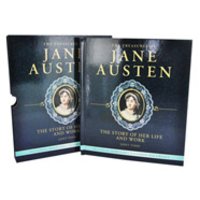
The treasures of Jane
Austen traces her life,
her relationships with
her family and friends.
The attitudes and customs
of the time that shaped
her work. The places
where she lived, worked,
and set her novels,
from rural Hampshire to
fashionable Bath Spa.
Handwritten drafts of
early writings such as
'The history of England'
and 'The Watsons' and
drafts of her later novel
- Persuasion. A letter
between Jane Austen and
her sister Cassandra. A
hand written note
outlining profits from
her novels. A
frontispiece to the 1833
edition of Pride and
Prejudice.
Availability: In Stock
£12.99
Available
-
The sequel to the
bestselling Silvertown,
which tells the story of
Aunt Daisy, and all the
other Aunt Daisys ? the
locals of the old East
End. For more than a
century, ?hopping? was
the main event in the
East End calendar ? an
annual expedition of over
200, 000 East Enders out
to the Kentish
countryside to look for
casual work picking hops
and stripping bines. Aunt
Daisy was one of those
day trippers. For her,
the train ride from
London Bridge to
Faversham was a kind of
magic that she always
passed in a rush of
sensation. To be away
from the tight hustle of
the city and lose herself
in the open spaces and
pollen mists of the
Kentish summer provided
her with a succour that
would last her through
the long winters back in
London. Her delicate
demeanour had never
really suited the smutty
terraces of the East End;
rather she considered
herself a countrywoman
who just so happened to
be stranded in the city.
Married young and yet not
unhappily to Harold
Baker, a closet
homosexual who would
never consummate their
union, at some early
point she wrote an escape
clause into her life that
shielded her from her
life's difficult
realities. It was this
resolve, a kind of
armour born out by her
dreamy nature, that more
than anything else marked
Aunt Daisy out as an East
Ender. Thoughtful,
moving and beautifully
rendered, Hopping
captures the essence of
ordinary family lives
often obscured from
history during an
extraordinary period in
London's past. Regardless
of era or circumstance,
chartering the shift of
the East End from a hive
of poverty whose dimmed
population toiled daily
at the docks, to a
Blitzed-out community
that defiantly rose to
confront the brutalities
of World War II, through
to the gamble and risk
emanating from behind the
glass and steel towers of
today's Canary Wharf,
Hopping stands as
testament to the true
East Ender disposition ?
an agility of spirit to
endure your lot and get
by.
Availability: In Stock
£1.99
Available
-
One of the most
influential families in
American history, the
Kennedys have had their
lives documented by the
media for the past 50
years. The Kennedys:
Americas Front-Page
Family tells the story of
this fascinating family
through a collection of
newspaper front pages
gathered from the
archives of The Poynter
Institute. From the
political rise and
assassination of
President John F. Kennedy
to the final
accomplishments and
passing of Senator Ted
Kennedy, nothing paints
a clearer and timelier
picture of these historic
events than the stories
written by the writers
and editors of the worlds
newspapers. A few of the
events that are featured
include JFKs declaration
for the presidency, JFKs
"man on the moon"
address, the Bay of Pigs
Invasion, the Cuban
Missle Crisis, Robert
Kennedys assasination,
JFK Jr.s plane crash,
Maria Shriver and Arnold
Schwarzeneggers marriage,
and Ted Kennedys
endorsement of Barack
Obama during the 2008
election.
Availability: In Stock
£2.99
Available
-
Private Sidney Phillips,
First Lieutenant Austin
Shofner Ensign Vernon
Micheel, Private Eugene
Sledge, Sergeant John
Basilone Through the eyes
of these five fearless
and devoted men, Hugh
Ambrose tells the epic
story of the war in the
Pacific. It is an
intimate, personal
history of a brutal,
unforgiving conflict.
Availability: In Stock
£2.99
 Denmark