

 United Kingdom
 France
 Germany
 Netherlands
 Sweden
 USA
USA
 Italy
Italy
 Spain
Spain

More From Contributor


Madagascar
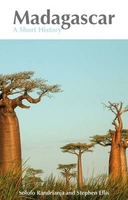
Two thousand years ago, Madagascar was probably uninhabited. An island twice the size of Great Britain, it was home to unique species of flora and fauna that were undisturbed by humanity until the first navigators landed on its shores. Since then, the changes imposed by humans on the wide range of environments to be found in this mini-continent have formed one of the threads of Madagascar`s history. No one knows where the island`s first inhabitants came from, but there was a strong connection from the earliest period to the islands of South East Asia - today`s Indonesia.Austronesians, Arabs, Portuguese, and Dutch sailors and traders successively dominated the sea-lanes around Madagascar, some of the world`s oldest long-distance shipping routes. Over the centuries, Madagascar
developed its own distinctive language and cultural systems, absorbing migrants from every shore of the Indian Ocean. In the nineteenth century, Britain and France projected a new type of global power that had a major effect on the island, which became a French colony from 1896 to 1960.Throughout this colourful and often turbulent history, the tension between the formation of a highly original culture and the absorption of immigrants, the development of strong social hierarchies, a long experience of slavery and the slave trade, have all had effects that are still felt today. Now home to 17 million people, Madagascar is one of the world`s most fascinating and least-known societies.
developed its own distinctive language and cultural systems, absorbing migrants from every shore of the Indian Ocean. In the nineteenth century, Britain and France projected a new type of global power that had a major effect on the island, which became a French colony from 1896 to 1960.Throughout this colourful and often turbulent history, the tension between the formation of a highly original culture and the absorption of immigrants, the development of strong social hierarchies, a long experience of slavery and the slave trade, have all had effects that are still felt today. Now home to 17 million people, Madagascar is one of the world`s most fascinating and least-known societies.

Product Description
Reviews/Comments
Add New
Vouchers
No voucher codes found.
Do you know a voucher code for this product or supplier? Add it to Insights for others to use.
Do you know a voucher code for this product or supplier? Add it to Insights for others to use.
 Denmark