More From Contributor

£9.99
At a time of unparalleled environmental change, there has never been a greater need for new ways of defending nature. In this forward-thinking work, Paul Jepson & Richard Ladle cover all aspects of modern conservation to provide a fascinating look into how we`re fighting for the earth`s species & habitats, as well as details on where conservation is heading, & how we can all contribute. Because, it`ll be far more than just a pity when we lose the polar bears, pandas, & parrots. ...
Archived Product
£14.99
Consett, Derwent Reservoir & Stanhope area on a detailed topographic & GPS compatible map No. 307, waterproof version, from the Ordnance Survey’s 1:25, 000 Explorer series. MOBILE DOWNLOADS: this title & all the other OS Explorer maps include a code for downloading after purchase the digital version onto your smartphone or tablet for viewing on the OS smartphone app.OS EXPLORER SERIES: to see the list of all the titles in the OS Explorer series, both paper & waterproof versions, please click on the series link. The Explorer series, Ordnance Survey’s most detailed maps recommended for anyone enjoying outdoor activities, provides topographic coverage of Great Britain at 1:25, 000 on GPS compatible maps with hiking trails, cycling routes & extensive tourist information. Each printed map is available either on paper or as a waterproof & tear-resistant OS Active Map, as indicated in its title. Britain’s National Parks & other areas of particular tourist interest are presented on often double-sided OL (Outdoor Leisure) maps, whilst most standard format Explorers cover an area of 30 x 20km (approx. 19 x 12 miles). All three versions (paper, waterproof & digital) are the same & provide plenty of recreational & tourist information, indicating the traditional public right of way paths (except in Scotland where different laws apply), including bridleways & byways. National Trails & other long-distance paths are marked, as well as permissive footpaths or bridleways & on-road or traffic-free cycle routes with, where appropriate, their National/ Regional Cycle Network numbers. Boundaries of access land are clearly marked. A wide range of symbols provides additional tourist information, highlighting camping & caravanning sites, information offices & visitors’ centres, parking & picnicking places, country pubs, sport & recreational facilities including cycle hire locations & mountain biking trails, historic buildings & museums, etc. Exceptionally clear presentation of the landscape is provided by contours at 5m or in the uplands at 10m intervals, with additional spot heights plus colouring and/or graphics for different types of woodlands, orchards, heath, marshl&, scree or boulders, & other topographic features. For GPS users the maps have British National Grid lines at 1km intervals, with latitude & longitude given by margin ticks at 1`. Clearly laid out map legend

Includes::
French & German translations for the tourist information symbols.

...
Archived Product
£8.99
Consett, Derwent Reservoir & Stanhope area on a detailed topographic & GPS compatible map No. 307, paper version, from the Ordnance Survey’s 1:25, 000 Explorer series. MOBILE DOWNLOADS: this title & all the other OS Explorer maps include a code for downloading after purchase the digital version onto your smartphone or tablet for viewing on the OS smartphone app.OS EXPLORER SERIES: to see the list of all the titles in the OS Explorer series, both paper & waterproof versions, please click on the series link. The Explorer series, Ordnance Survey’s most detailed maps recommended for anyone enjoying outdoor activities, provides topographic coverage of Great Britain at 1:25, 000 on GPS compatible maps with hiking trails, cycling routes & extensive tourist information. Each printed map is available either on paper or as a waterproof & tear-resistant OS Active Map, as indicated in its title. Britain’s National Parks & other areas of particular tourist interest are presented on often double-sided OL (Outdoor Leisure) maps, whilst most standard format Explorers cover an area of 30 x 20km (approx. 19 x 12 miles). All three versions (paper, waterproof & digital) are the same & provide plenty of recreational & tourist information, indicating the traditional public right of way paths (except in Scotland where different laws apply), including bridleways & byways. National Trails & other long-distance paths are marked, as well as permissive footpaths or bridleways & on-road or traffic-free cycle routes with, where appropriate, their National/ Regional Cycle Network numbers. Boundaries of access land are clearly marked. A wide range of symbols provides additional tourist information, highlighting camping & caravanning sites, information offices & visitors’ centres, parking & picnicking places, country pubs, sport & recreational facilities including cycle hire locations & mountain biking trails, historic buildings & museums, etc. Exceptionally clear presentation of the landscape is provided by contours at 5m or in the uplands at 10m intervals, with additional spot heights plus colouring and/or graphics for different types of woodlands, orchards, heath, marshl&, scree or boulders, & other topographic features. For GPS users the maps have British National Grid lines at 1km intervals, with latitude & longitude given by margin ticks at 1`. Clearly laid out map legend

Includes::
French & German translations for the tourist information symbols.

...
Archived Product
£11.19
Laminated waterproof edition of a detailed topographic map of Consett & Derwent Reservoir from the Ordnance Survey Explorer series, covering Stanhope. Edition A1 with minor changes; Publication date February 2012 About this series: These highly detailed maps show all the administrative boundaries, settlements as small as isolated farms, the road network down to unfenced roads & country tracks, & field boundaries (hedges & drystone walls) which make navigation across the countryside much easier. Steep gradients on roads are indicated. Various landmarks, e.g. powerlines, archaeological sites, windmills, churches & lighthouses are shown & additional graphics indicate natural terrain features such as cliffs, scree, mud & vegetation variations. The contour interval is 5 metres in the lower parts of the country & 10 metres in the uplands, & spot heights are marked. Each map covers an area of 30 x 20km (i.e. approx. 19 x 12 miles), with some double-sided maps covering more, as indicated in the individual descriptions. The maps are fully GPS compatible, with the National Grid shown at 1km intervals & latitude & longitude indicated by margin ticks at 1'. The Explorer series has replaced the earlier, green-cover Pathfinder maps. The Explorer series is now complete & covers all of Engl&, Wales & Scotl&. Some sheets for popular areas like the National Parks are still branded as Outdoor Leisure (OL) maps, but are now included in this series as the cartography is the same as that in the Explorer Maps. The Explorer maps offer a substantial improvement on the Pathfinder series, with greater use of colour, larger area per map, & stronger emphasis on information for ramblers & tourists. This series is ideal for walking & other outdoor pursuits & each map shows a large amount of information for ramblers & tourists. Public rights of way are shown (except in Scotland), together with other routes with public access: National Trails & Recreational Paths, permitted paths & bridleways, & selected cycle routes. Open access land created under the Countryside & Rights of Way Act 2000 is marked. Tourist information

Includes::
caravan & camp sites, Park & Ride locations, recreation/leisure/sport centres, museums, historic buildings, English Heritage & National Trust sites, rural pubs, etc. The map legend is in English only, except for the tourist information content which is also in French & German.

...
Archived Product
£6.39
A detailed topographic map of Consett & Derwent Reservoir from the Ordnance Survey Explorer series, covering Stanhope. Edition: A1 with minor changes; Publication date April 2011 About this series: These highly detailed maps show all the administrative boundaries, settlements as small as isolated farms, the road network down to unfenced roads & country tracks, & field boundaries (hedges & drystone walls) which make navigation across the countryside much easier. Steep gradients on roads are indicated. Various landmarks, e.g. powerlines, archaeological sites, windmills, churches & lighthouses are shown & additional graphics indicate natural terrain features such as cliffs, scree, mud & vegetation variations. The contour interval is 5 metres in the lower parts of the country & 10 metres in the uplands, & spot heights are marked. Each map covers an area of 30 x 20km (i.e. approx. 19 x 12 miles), with some double-sided maps covering more, as indicated in the individual descriptions. The maps are fully GPS compatible, with the National Grid shown at 1km intervals & latitude & longitude indicated by margin ticks at 1'. The Explorer series has replaced the earlier, green-cover Pathfinder maps. The Explorer series is now complete & covers all of Engl&, Wales & Scotl&. Some sheets for popular areas like the National Parks are still branded as Outdoor Leisure (OL) maps, but are now included in this series as the cartography is the same as that in the Explorer Maps. The Explorer maps offer a substantial improvement on the Pathfinder series, with greater use of colour, larger area per map, & stronger emphasis on information for ramblers & tourists. This series is ideal for walking & other outdoor pursuits & each map shows a large amount of information for ramblers & tourists. Public rights of way are shown (except in Scotland), together with other routes with public access: National Trails & Recreational Paths, permitted paths & bridleways, & selected cycle routes. Open access land created under the Countryside & Rights of Way Act 2000 is marked. Tourist information

Includes::
caravan & camp sites, Park & Ride locations, recreation/leisure/sport centres, museums, historic buildings, English Heritage & National Trust sites, rural pubs, etc. The map legend is in English only, except for the tourist information content which is also in French & German.

...
Archived Product
£3.50
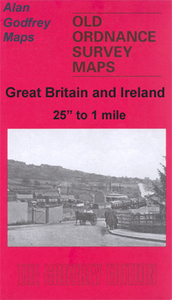
Consett in 1896 in a fascinating series of reproductions of old Ordnance Survey plans in the Alan Godfrey Editions, ideal for anyone interested in the history of their neighbourhood or family. The map covers the steel town of Consett, which developed from a hamlet of just 146 people in 1831. The Derwent Iron Company was formed in 1841 & this was succeeded in 1864 by the Consett Iron Company. By 1891 the population was 8, 760. The town is in the top right quadrant of the map; the massive iron works dominates the western half & is shown here with all its railway tracks, blast furnaces, coke ovens. To the west is Consett Hall & Consett Grove. South of the town are railways: the NER Annfield Plain Branch, Iveston Railway, Consett Iron Works Railway. Other features include Templetown, Delves Brick Works, Latterday Saint Pit, Puddlers Row, Town Hall, Carrhouse Quarry, Christ Church, Buildings Farm, etc. On the reverse are extracts from two directories of Consett. About the Alan Godfrey Editions of the 25” OS Series: Selected towns in Great Britain & Ireland are covered by maps showing the extent of urban development in the last decades of the 19th & early 20th century. The plans have been taken from the Ordnance Survey mapping & reprinted at about 15 inches to one mile (1:4, 340). On the reverse most maps have historical notes & many also include extracts from contemporary directories. Most maps cover about one mile (1.6kms) north/south, one & a half miles (2.4kms) across; adjoining sheets can be combined to provide wider coverage.FOR MORE INFORMATION & A COMPLETE LIST OF ALL AVAILABLE TITLES PLEASE CLICK ON THE SERIES LINK. ...
Archived Product
£20.00
Bee Wilson is the beloved food writer & historian who writes as the Kitchen Thinker in the Sunday Telegraph, & is the author of Swindled!. Her charming & original new book, Consider the Fork, explores how the implements we use in the kitchen have shaped the way we cook & live. A wooden spoon
- most trusty & loveable of kitchen implements
- looks like the opposite of 'technology', as the word is normally understood. But look closer. Is it oval or round? Does it have an extra-long handle to give your hand a place of greater safety from a hot skillet? Or a pointy bit at one side to get the lumpy bits in the corner of the pan? It took countless inventions to get to the well-equipped kitchens we have now, where our old low-tech spoon is joined by mixers, freezers & microwaves, but the story of human invention in the kitchen is largely unseen. Discovering the histories of our knives, ovens & kitchens themselves, Bee Wilson explores, among many other things, why the French & Chinese have such different cultures of the knife; & why Roman kitchens contain so many implements we recognize. Encompassing inventors, scientists, cooks & chefs, this is the previously unsung history of our kitchens.

...
Archived Product
£8.99
Now considered a modern classic, CONSIDER THE LILIES focuses on the eviction of an old woman from her croft. The Highland Clearances, the eviction of crofters from their homes between 1792 & the 1850s, was one of the cruellest episodes in Scotland`s history. In CONSIDER THE LILIES Iain Crichton Smith captures its impact through the thoughts & memories of an old woman who has lived all her life within the narrow confines of her community. Alone & bewildered by the demands of the factor, Patrick Sellar, she approaches the minister for help, only to have her faith shattered by his hypocrisy. She finds comfort, however, from a surprising source: Donald Macleod, an imaginative & self-educated man who has been ostracised by his neighbours, not least by Mrs Scott herself, on account of his atheism. Through him & through the circumstances forced upon her, the old woman achieves new strength. Written with compassion, in spare, simple prose, Consider the Lilies is a moving testament to the enduring qualities which enable the oppressed to triumph in defeat. ...
Archived Product
£16.99
In Consolations of the Forest, Sylvain Tesson explains how he found a radical solution to his need for freedom, one as ancient as the experiences of the hermits of old Russia: he decided to lock himself alone in a cabin in the middle taiga, on the shores of Baikal, for six months. From February to July 2010, he lived in silence, solitude, & cold. His cabin, built by Soviet geologists in the Brezhnev years, is a cube of logs three meters by three meters, heated by a cast iron skillet, six-day walk from the nearest village & hundreds of miles of track. To live isolated from the world while retaining one's sanity requires a routine, Tesson discovered. In the morning, he would read, write, smoke, or draw, & then devoted hours to cutting the wood, shoveling snow, & fishing. Emotionally, these months proved a challenge, & the loneliness was crippling. Tesson found in paper a valuable confidant, the notebook, a polite companion. Noting carefully, almost daily, his impressions of the silence, his struggles to survive in a hostile nature, his despair, his doubts, but also its moments of ecstasy, inner peace & harmony with nature, Sylvain Tesson shares with us an extraordinary experience. Writer, journalist & traveler, Sylvain Tesson was born in 1972. After a world tour by bicycle, he developed a passion for Central Asia, & has travelled tirelessly since 1997. He came to prominence in 2004 with a remarkable travelogue, Axis of Wolf (Robert Laffont). Editions Gallimard have already published his A Life of a Mouthful (2009) &, with Thomas Goisque & Bertrand de Miollis, High Voltage (2009). In 2009 he won the Prix Goncourt for A Life of a Mouthful, & in 2011 won the Prix Medicis for non-fiction for Consolations of the Forest: Alone in Siberia. ...
Archived Product
£9.99
Sylvain Tesson, found a radical solution to his need for freedom, one as ancient as the experiences of the hermits of old Russia: he decided to lock himself alone in a cabin in the middle taiga, on the shores of Baikal, for six months. Noting carefully his impressions of the silence, Sylvain Tesson shares with us an extraordinary experience. ...
Archived Product

Consett 1896

Consett in 1896 in a fascinating series of reproductions of old Ordnance Survey plans in the Alan Godfrey Editions, ideal for anyone interested in the history of their neighbourhood or family. Selected towns in Great Britain and Ireland are covered by maps showing the extent of urban development in the last decades of the 19th and early 20th century.In this title: the map covers the steel town of Consett, which developed from a hamlet of just 146 people in 1831. The Derwent Iron Company was formed in 1841 and this was succeeded in 1864 by the Consett Iron Company. By 1891 the population was 8, 760. The town is in the top right quadrant of the map; the massive iron works dominates the western half and is shown here with all its railway tracks, blast furnaces, coke ovens. To the west is
Consett Hall and Consett Grove. South of the town are railways: the NER Annfield Plain Branch, Iveston Railway, Consett Iron Works Railway. Other features include Templetown, Delves Brick Works, Latterday Saint Pit, Puddlers Row, Town Hall, Carrhouse Quarry, Christ Church, Buildings Farm. On the reverse are extracts from two directories of Consett. About the Alan Godfrey Editions of the 25
RIP - This product is no longer available on our network. It was last seen on 25.09.2019

This page now acts as a permanent archive for this product. Add more information using the comments box below to ensure it can still be found by future generations.

Use our search facility to see if it is available from an alternative contributor.
  • External links may include paid for promotion
  • Availability: Out Of Stock
  • Supplier: Stanfords
  • SKU: 9786000008628
Availability: In Stock
£2.95

Product Description

Consett in 1896 in a fascinating series of reproductions of old Ordnance Survey plans in the Alan Godfrey Editions, ideal for anyone interested in the history of their neighbourhood or family. Selected towns in Great Britain & Ireland are covered by maps showing the extent of urban development in the last decades of the 19th & early 20th century. In this title: the map covers the steel town of Consett, which developed from a hamlet of just 146 people in 1831. The Derwent Iron Company was formed in 1841 & this was succeeded in 1864 by the Consett Iron Company. By 1891 the population was 8, 760. The town is in the top right quadrant of the map; the massive iron works dominates the western half & is shown here with all its railway tracks, blast furnaces, coke ovens. To the west is Consett Hall & Consett Grove. South of the town are railways: the NER Annfield Plain Branch, Iveston Railway, Consett Iron Works Railway. Other features include Templetown, Delves Brick Works, Latterday Saint Pit, Puddlers Row, Town Hall, Carrhouse Quarry, Christ Church, Buildings Farm. On the reverse are extracts from two directories of Consett. About the Alan Godfrey Editions of the 25

Reviews/Comments

Add New

Price History

Vouchers

No voucher codes found.
Do you know a voucher code for this product or supplier? Add it to Insights for others to use.

Facebook

Jargon Buster

Steel - An alloy made predominately of Iron combined with <2% carbon
iron - An electrical deviced used for removing creases from fabrics
iron - A chemical element (FE). The most common element on earth
History - Anything that happens in the past. An acedemic subject.
Railways - A set of tracks that have been laid for the purpose of trains to travel up and down them
Hall - A room at the inside of an entrance of a house.
Ideal - Something that satisfies a perfect criteria.
Family - A group of people that live together made up from parents and children.

Supplier Information

Stanfords
Stanfords was established in 1853 and opened their iconic Covent Garden flagship store in 1901. They have become the top retailer of maps, travel books and accessories in the UK and arguably offer the largest selection of maps and travel books worldwide. Famous names such as Captain Robert Falcon Scott, Ranulph Fiennes and Michael Palin have purchased from Stanfords. They now have a shop in Bristol and both stores together with other venues operate a calendar of events including talks, book signings and exhibitions. As a specialist map retailer, the map selection is comprehensive and includes road maps, street maps and walking maps from worldwide destinations, as well as a selection of world atlases and wall maps. Books include travel guides and travel literature. Stanfords also stock globes, from miniatures made of blue marble to magnificent floor-standing globes. The website features a selection of interesting articles on travel topics.
Page Updated: 2023-11-12 20:15:36

Community Generated Product Tags

Oh No! The productWIKI community hasn't generated any tags for this product yet!
Menu