

 United Kingdom
 France
 Germany
 Netherlands
 Sweden
 USA
USA
 Italy
Italy
 Spain
Spain

More From Contributor


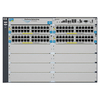



HP E5406 Zl
Overview The HP E5400 zl Switch Series consists of advanced intelligent switches in the HP E-Series product-line. The E5400 zl series includes 6-slot and 12-slot chassis and associated zl modules and bundles. The foundation for all of these switches is a purpose-built, programmable ProVision ASIC that allows the most demanding networking features, such as quality of service (QoS) and security, to be implemented in a scalable yet granular fashion. With 10/100, Gigabit Ethernet and 10 Gigabit Ethernet interfaces, choice of PoE+ & Non-PoE, integrated layer 3 features and HP allianceONE Solutions, the E5400 zl switches offer excellent investment protection, flexibility, and scalability, as well as ease of deployment, operation, and maintenance. Features Quality of Service (QoS)
? Advanced classifier-based QoS: classifies traffic using multiple match criteria based on Layer 2, 3, and 4 information; applies QoS policies such as setting priority level and rate limit to selected traffic on a per-port or per-VLAN basis Management ? Remote Intelligent Mirroring: mirrors selected ingress/egress traffic based on ACL, port, MAC address, or VLAN to a local or remote E8200, E6200, E5400, or E3500 switch anywhere on the network Connectivity ? IEEE 802.3az Energy Efficient Ethernet: Lowers power consumption in periods of low link usage. (Supported on v2 zl 10/100/1000 & 10/100 modules) Performance ? High-speed/capacity architecture: 1 Tbps crossbar switching fabric provides intra-module and inter-module switching with 585.6 million pps throughput on
the purpose-built ProVision ASICs Resiliency and high availability ? Virtual Router Redundancy Protocol: allows groups of two routers to dynamically back each other up to create highly available routed environments Layer 2 switching ? HP's switch meshing: dynamically load-balances across multiple active redundant links to increase available aggregate bandwidth Layer 3 services ? User Datagram Protocol (UDP) helper function: allows UDP broadcasts to be directed across router interfaces to specific IP unicast or subnet broadcast addresses and prevents server spoofing for UDP services such as DHCP
? Advanced classifier-based QoS: classifies traffic using multiple match criteria based on Layer 2, 3, and 4 information; applies QoS policies such as setting priority level and rate limit to selected traffic on a per-port or per-VLAN basis Management ? Remote Intelligent Mirroring: mirrors selected ingress/egress traffic based on ACL, port, MAC address, or VLAN to a local or remote E8200, E6200, E5400, or E3500 switch anywhere on the network Connectivity ? IEEE 802.3az Energy Efficient Ethernet: Lowers power consumption in periods of low link usage. (Supported on v2 zl 10/100/1000 & 10/100 modules) Performance ? High-speed/capacity architecture: 1 Tbps crossbar switching fabric provides intra-module and inter-module switching with 585.6 million pps throughput on
the purpose-built ProVision ASICs Resiliency and high availability ? Virtual Router Redundancy Protocol: allows groups of two routers to dynamically back each other up to create highly available routed environments Layer 2 switching ? HP's switch meshing: dynamically load-balances across multiple active redundant links to increase available aggregate bandwidth Layer 3 services ? User Datagram Protocol (UDP) helper function: allows UDP broadcasts to be directed across router interfaces to specific IP unicast or subnet broadcast addresses and prevents server spoofing for UDP services such as DHCP

Product Description
Reviews/Comments
Add New
Vouchers
No voucher codes found.
Do you know a voucher code for this product or supplier? Add it to Insights for others to use.
Do you know a voucher code for this product or supplier? Add it to Insights for others to use.
 Denmark