

 United Kingdom
 France
 Germany
 Netherlands
 Sweden
 USA
USA
 Italy
Italy
 Spain
Spain

More From Contributor





Trieste
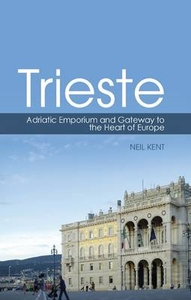
Neil Kent`s portrait of Trieste fills a major gap in contemporary writing on Italy, an important task bearing in mind that the city is now one of Western Europe`s major gateways to the Balkans. It focuses in particular on the last two centuries: first, on the post-Napoleonic period-its heyday- when Trieste emerged as the otherwise landlocked Habsburg Empire`s gateway to the Adriatic, a rich and thriving city of numerous ethnic and religious groups; then on the period of decline after the First World War, when Italian irredentists longing to recover Dalmatia radiated out from the city; and next on the decades of the Cold War, when Trieste became a marginalized border town, with its link to the Balkans virtually blocked off. Finally the book moves into the contemporary period, when
the political and economic reorganisation of the Balkans has made Trieste south-eastern Europe`s gateway to western Europe. While political, economic and social issues form the primary focus, art, literature and architecture, natural geography and aspects relating to health and hygiene are also examined.
the political and economic reorganisation of the Balkans has made Trieste south-eastern Europe`s gateway to western Europe. While political, economic and social issues form the primary focus, art, literature and architecture, natural geography and aspects relating to health and hygiene are also examined.

Product Description
Reviews/Comments
Add New
Vouchers
No voucher codes found.
Do you know a voucher code for this product or supplier? Add it to Insights for others to use.
Do you know a voucher code for this product or supplier? Add it to Insights for others to use.
 Denmark