

 United Kingdom
 France
 Germany
 Netherlands
 Sweden
 USA
USA
 Italy
Italy
 Spain
Spain

More From Contributor



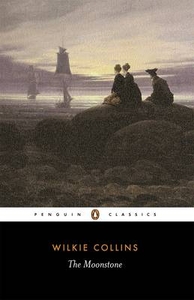
The Moonstone
”The Moonstone” is one of the first true works of detective fiction, in which Wilkie Collins established the groundwork for the genre itself. This ”Penguin Classics” edition is edited with an introduction by Sandra Kemp. ”The Moonstone”, a priceless yellow diamond, is looted from an Indian temple and maliciously bequeathed to Rachel Verinder. On her eighteenth birthday, her friend and suitor Franklin Blake brings the gift to her. That very night, it is stolen again. No one is above suspicion, as the idiosyncratic Sergeant Cuff and the Franklin piece together a puzzling series of events as mystifying as an opium dream and as deceptive as the nearby Shivering Sand. The intricate plot and modern technique of multiple narrators made Wilkie Collins` 1868 work a huge success in
the Victorian sensation genre. With a reconstruction of the crime, red herrings and a `locked-room` puzzle, ”The Moonstone” was also a major precursor of the modern mystery novel. In her introduction Sandra Kemp explores ”The Moonstone`s” the detective elements of Collins` writing, and reveals how Collins` sensibilities were untypical of his era.Wilkie Collins (1824-1889) was born in London in 1824, the eldest son of the landscape painter William Collins. In 1846 he was entered to read for the bar at Lincoln`s Inn, where he gained the knowledge that was to give him much of the material for his writing. From the early 1850s he was a friend of Charles Dickens, who produced and acted in two melodramas written by Collins, ”The Lighthouse” and ”The Frozen Deep”. Of his
novels, Collins is best remembered for ”The Woman in White” (1859), ”No Name” (1862), ”Armadale” (1866) and ”The Moonstone” (1868). If you enjoyed ”The Moonstone” you might like Collins` ”The Woman in White”, also available in ”Penguin Classics”. ”Probably the very finest detective story ever written.” (Dorothy L. Sayers). ”The first, the longest and the best of modern modern English detective novels.” (T.S. Eliot).
the Victorian sensation genre. With a reconstruction of the crime, red herrings and a `locked-room` puzzle, ”The Moonstone” was also a major precursor of the modern mystery novel. In her introduction Sandra Kemp explores ”The Moonstone`s” the detective elements of Collins` writing, and reveals how Collins` sensibilities were untypical of his era.Wilkie Collins (1824-1889) was born in London in 1824, the eldest son of the landscape painter William Collins. In 1846 he was entered to read for the bar at Lincoln`s Inn, where he gained the knowledge that was to give him much of the material for his writing. From the early 1850s he was a friend of Charles Dickens, who produced and acted in two melodramas written by Collins, ”The Lighthouse” and ”The Frozen Deep”. Of his
novels, Collins is best remembered for ”The Woman in White” (1859), ”No Name” (1862), ”Armadale” (1866) and ”The Moonstone” (1868). If you enjoyed ”The Moonstone” you might like Collins` ”The Woman in White”, also available in ”Penguin Classics”. ”Probably the very finest detective story ever written.” (Dorothy L. Sayers). ”The first, the longest and the best of modern modern English detective novels.” (T.S. Eliot).

Product Description
Reviews/Comments
Add New
Vouchers
No voucher codes found.
Do you know a voucher code for this product or supplier? Add it to Insights for others to use.
Do you know a voucher code for this product or supplier? Add it to Insights for others to use.
 Denmark