

 United Kingdom
 France
 Germany
 Netherlands
 Sweden
 USA
USA
 Italy
Italy
 Spain
Spain

More From Contributor






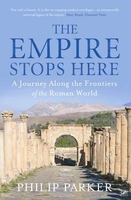
The Empire Stops Here
The Roman Empire was the largest and most enduring of the ancient world. From its zenith under Augustus and Trajan in the first century AD to its decline and fall amidst the barbarian invasions of the fifth century, the Empire guarded and maintained a frontier that stretched for 5, 000 kilometres, from Carlisle to Cologne, from Augsburg to Antioch, and from Aswan to the Atlantic. Far from being at the periphery of the Roman world, the frontier played a crucial role in making and breaking emperors, creating vibrant and astonishingly diverse societies along its course which pulsed with energy while the centre became enfeebled and sluggish. This remarkable new book traces the course of those frontiers, visiting all its astonishing sites, from Hadrian`s Wall in the north of Britain to
the desert cities of Palmyra and Leptis Magna. It tells the fascinating stories of the men and women who lived and fought along it, from Alaric the Goth, who descended from the Danube to sack Rome in 410, to Zenobia the desert queen, who almost snatched the entire eastern provinces from Rome in the third century.It is at their edges, in time and geographical extent, that societies reveal their true nature, constantly seeking to recreate and renew themselves. In this examination of the places that the mighty Roman Empire stopped expanding, Philip Parker reveals how and why the Empire endured for so long, as well as describing the rich and complex architectural and cultural legacy which it has bequeathed to us.
the desert cities of Palmyra and Leptis Magna. It tells the fascinating stories of the men and women who lived and fought along it, from Alaric the Goth, who descended from the Danube to sack Rome in 410, to Zenobia the desert queen, who almost snatched the entire eastern provinces from Rome in the third century.It is at their edges, in time and geographical extent, that societies reveal their true nature, constantly seeking to recreate and renew themselves. In this examination of the places that the mighty Roman Empire stopped expanding, Philip Parker reveals how and why the Empire endured for so long, as well as describing the rich and complex architectural and cultural legacy which it has bequeathed to us.

Product Description
Reviews/Comments
Add New
Vouchers
No voucher codes found.
Do you know a voucher code for this product or supplier? Add it to Insights for others to use.
Do you know a voucher code for this product or supplier? Add it to Insights for others to use.
 Denmark