

 United Kingdom
 France
 Germany
 Netherlands
 Sweden
 USA
USA
 Italy
Italy
 Spain
Spain

More From Contributor


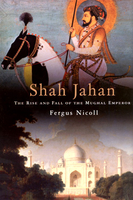
Shah Jahan
Shah Jahan by Fergus Nicoll is the story of an enlightened despot, a king who dispensed largesse to favoured courtiers but ignored plague in the countryside. Khurram Shah Jahan, a title meaning `King of the World`, ruled the Mughal Empire from 1628 to 1659. His reign marked the cultural zenith of the Mughal dynasty: a period of multiculturalism, poetry, fine art and stupendous architecture. His legacy in stone embraces not only the Taj Mahal - the tomb to his beloved second wife Mumtaz - but also for the Pearl Mosque, the Red Fort, Jama Masid in Delhi, the Shalimar Gardens in Kashmir and the priceless Peacock Throne.But Shah Jahan was also a ruthless political operator, who only achieved power after ordering the murder of two brothers and at least six other relatives, one of them
the legitimately crowned Emperor Dawar- Bakhsh. Fergus Nicoll travelled widely through India and Pakistan to follow in Shah Jahan`s footsteps and find new evidence of his passing. As a result, many aspects of the conventional wisdom have had to be re-examined.
the legitimately crowned Emperor Dawar- Bakhsh. Fergus Nicoll travelled widely through India and Pakistan to follow in Shah Jahan`s footsteps and find new evidence of his passing. As a result, many aspects of the conventional wisdom have had to be re-examined.

Product Description
Reviews/Comments
Add New
Vouchers
No voucher codes found.
Do you know a voucher code for this product or supplier? Add it to Insights for others to use.
Do you know a voucher code for this product or supplier? Add it to Insights for others to use.
 Denmark