

 United Kingdom
 France
 Germany
 Netherlands
 Sweden
 USA
USA
 Italy
Italy
 Spain
Spain

More From Contributor


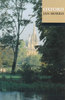

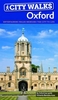
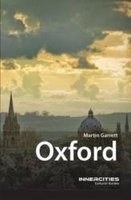
Oxford
Oxford started as an Anglo-Saxon border outpost, with a bridge replacing the `oxen ford` from which it takes its name. It became a centre for trade and religion and developed one of the oldest universities in Europe from the late twelfth century. Since the Middle Ages its individual colleges have gone on building--chapels, halls, accommodation, libraries--in an extraordinary variety of styles from Gothic to Brutalist. Oxford also has many churches, a Covered Market, an extraordinary museum of Natural History in soaring iron, glass and stone, and a flamboyant neo-Jacobean Town Hall. In such a place, suggested W.B. Yeats, `one almost expects the people to sing instead of speaking`. Nevertheless, Oxford has become a busy modern city. For much of the twentieth century the car
industry, established in Cowley by William Morris (Lord Nuffield), dominated local life. Today there are cinemas, theatres, innumerable restaurants, shopping centres, an ice-rink, business and technology centres, close links to London by bus and train. Amidst the expanding city Oxford University retains its academic excellence, its student exuberance and its physical beauty.And it has been joined by a notably successful second university, Oxford Brookes. Martin Garrett discusses the literature Oxford has generated: from Chaucer to Lewis Carroll, Wilde, Evelyn Waugh, Barbara Pym, Tolkien and C.S. Lewis and Iris Murdoch. There are also chapters on architecture, on religion, on theatre, film and art--including Oxford`s great museum of art and history the Ashmolean--and on
leisure pursuits (punting and rowing, gardens, student pranks, city fairs and carnival). A chapter on commerce focuses on Victorian shops, Cornmarket and the Morris Motor Works, while a brief social history includes the former Oxford Castle and a gallery of dons as rulers--visionary or ignorant, charismatic or dull. Garrett looks at social change, especially the transformation in the position of Oxford women, and considers the city`s darker side of crime. A final chapter explores its rich surroundings: the countryside where Matthew Arnold`s `black-winged swallows haunt the glittering Thames`, the baroque grandeur of Blenheim Palace, the ancient windswept Ridgeway and White Horse.
industry, established in Cowley by William Morris (Lord Nuffield), dominated local life. Today there are cinemas, theatres, innumerable restaurants, shopping centres, an ice-rink, business and technology centres, close links to London by bus and train. Amidst the expanding city Oxford University retains its academic excellence, its student exuberance and its physical beauty.And it has been joined by a notably successful second university, Oxford Brookes. Martin Garrett discusses the literature Oxford has generated: from Chaucer to Lewis Carroll, Wilde, Evelyn Waugh, Barbara Pym, Tolkien and C.S. Lewis and Iris Murdoch. There are also chapters on architecture, on religion, on theatre, film and art--including Oxford`s great museum of art and history the Ashmolean--and on
leisure pursuits (punting and rowing, gardens, student pranks, city fairs and carnival). A chapter on commerce focuses on Victorian shops, Cornmarket and the Morris Motor Works, while a brief social history includes the former Oxford Castle and a gallery of dons as rulers--visionary or ignorant, charismatic or dull. Garrett looks at social change, especially the transformation in the position of Oxford women, and considers the city`s darker side of crime. A final chapter explores its rich surroundings: the countryside where Matthew Arnold`s `black-winged swallows haunt the glittering Thames`, the baroque grandeur of Blenheim Palace, the ancient windswept Ridgeway and White Horse.

Product Description
Reviews/Comments
Add New
Vouchers
No voucher codes found.
Do you know a voucher code for this product or supplier? Add it to Insights for others to use.
Do you know a voucher code for this product or supplier? Add it to Insights for others to use.
 Denmark