

 United Kingdom
 France
 Germany
 Netherlands
 Sweden
 USA
USA
 Italy
Italy
 Spain
Spain

More From Contributor





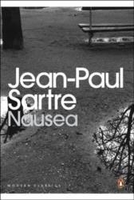
Nausea
Jean-Paul Sartre`s first published novel, ”Nausea” is both an extended essay on existentialist ideals, and a profound fictional exploration of a man struggling to restore a sense of meaning to his life. This ”Penguin Modern Classics” edition is translated from the French by Robert Baldick with an introduction by James Wood. ”Nausea” is both the story of the troubled life of an introspective historian, Antoine Roquentin, and an exposition of one of the most influential and significant philosophical attitudes of modern times - existentialism. The book chronicles his struggle with the realisation that he is an entirely free agent in a world devoid of meaning; a world in which he must find his own purpose and then take total responsibility for his choices. A seminal work of
contemporary literary philosophy, ”Nausea” evokes and examines the dizzying angst that can come from simply trying to live. Jean-Paul Sartre (1905-1980) was an iconoclastic French philosopher, novelist, playwright and, widely regarded as the central figure in post-war European culture and political thinking.Sartre famously refused the Nobel Prize for literature in 1964 on the grounds that `a writer should not allow himself to be turned into an institution`. His most well-known works, all of which are published by Penguin, include ”The Age of Reason”, ”Nausea” and ”Iron in the Soul”. If you enjoyed ”Nausea”, you might like Albert Camus` ”The Outsider”, also available in ”Penguin Modern Classics”. ”One of the very few successful members of the genre
”Philosophical Novel”...a young man`s tour de force”. (Iris Murdoch).
contemporary literary philosophy, ”Nausea” evokes and examines the dizzying angst that can come from simply trying to live. Jean-Paul Sartre (1905-1980) was an iconoclastic French philosopher, novelist, playwright and, widely regarded as the central figure in post-war European culture and political thinking.Sartre famously refused the Nobel Prize for literature in 1964 on the grounds that `a writer should not allow himself to be turned into an institution`. His most well-known works, all of which are published by Penguin, include ”The Age of Reason”, ”Nausea” and ”Iron in the Soul”. If you enjoyed ”Nausea”, you might like Albert Camus` ”The Outsider”, also available in ”Penguin Modern Classics”. ”One of the very few successful members of the genre
”Philosophical Novel”...a young man`s tour de force”. (Iris Murdoch).

Product Description
Reviews/Comments
Add New
Vouchers
No voucher codes found.
Do you know a voucher code for this product or supplier? Add it to Insights for others to use.
Do you know a voucher code for this product or supplier? Add it to Insights for others to use.
 Denmark