

 United Kingdom
 France
 Germany
 Netherlands
 Sweden
 USA
USA
 Italy
Italy
 Spain
Spain

More From Contributor





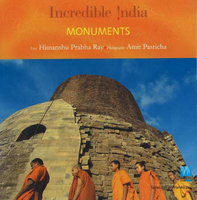
Monuments - Incredible! India
The book locates monuments in their social and cultural context and views them as religious architecture. The shrine was not only a place of ritual, but also a centre for religious festivities and discourses on ethics and moral values. The temple or the mosque thus evolved as a crucial link between the ruling elite and the community and through its wider network extended the religious domain beyond political frontiers. With the establishment of colonial rule in South Asia during the 19th and 20th centuries, the relationship between the shrine and its community was radically transformed. This book takes the reader through the gradual metamorphosis in the character of religious sites from being culturally pluralistic to a monotheistic religious identity. This interesting book highlights
the genesis of the multi-religious identity of monuments in India.
the genesis of the multi-religious identity of monuments in India.

Product Description
Reviews/Comments
Add New
Vouchers
No voucher codes found.
Do you know a voucher code for this product or supplier? Add it to Insights for others to use.
Do you know a voucher code for this product or supplier? Add it to Insights for others to use.
 Denmark