

 United Kingdom
 France
 Germany
 Netherlands
 Sweden
 USA
USA
 Italy
Italy
 Spain
Spain

More From Contributor




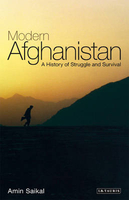
Modern Afghanistan
The treacherous mountain passes and blasted desert plains of Afghanistan have been the graveyard of every would-be conquering army since the days of Alexander the Great. With America, Britain and NATO committed to a long-term political and military engagement there, it is imperative to understand the country`s complex and bloody history. Afghanistan emerged in the mid-eighteenth century from the collapse of the Persian Safavid Empire and the decline of the Mughal dynasty in India. The nineteenth century saw the country ravaged by the rivalry of warring elites, and their great power supporters. In recent times, Afghanistan has experienced the Soviet invasion of 1979, the Pakistan-backed internal conflict of the 1990s, the Taliban regime and then the US invasion after the catastrophe
of 9/11. Today, whilst the US-backed government is struggling to expand its control beyond Kabul, narco-warlords, jihadists and Western troops fight out the battle for control of this strategically vital country. Why has Afghanistan`s course of development been so turbulent? Why does it remain so vulnerable to domestic instability, foreign intervention and ideological extremism?In reconstructing the tempestuous narrative of modern Afghanistan, Amin Saikal provides a sweeping new understanding of its troubled past. He identifies the country`s inability to develop stable political structures as stemming from the inter-dynastic rivalry (exacerbated by polygamy) that scarred successive royal families from the end of the eighteenth century until the pro-Communist coup of April 1978.
Outside interventions further weakened the country internally, preventing socio-economic development and leaving the country ripe for the politics of ideological extremism. ”Modern Afghanistan: A History of Struggle and Survival” is the definitive study of Afghanistan and its troubles. It will be vital reading for all those who are interested in the changing politics of the Middle East and Central Asia.
of 9/11. Today, whilst the US-backed government is struggling to expand its control beyond Kabul, narco-warlords, jihadists and Western troops fight out the battle for control of this strategically vital country. Why has Afghanistan`s course of development been so turbulent? Why does it remain so vulnerable to domestic instability, foreign intervention and ideological extremism?In reconstructing the tempestuous narrative of modern Afghanistan, Amin Saikal provides a sweeping new understanding of its troubled past. He identifies the country`s inability to develop stable political structures as stemming from the inter-dynastic rivalry (exacerbated by polygamy) that scarred successive royal families from the end of the eighteenth century until the pro-Communist coup of April 1978.
Outside interventions further weakened the country internally, preventing socio-economic development and leaving the country ripe for the politics of ideological extremism. ”Modern Afghanistan: A History of Struggle and Survival” is the definitive study of Afghanistan and its troubles. It will be vital reading for all those who are interested in the changing politics of the Middle East and Central Asia.

Product Description
Reviews/Comments
Add New
Vouchers
No voucher codes found.
Do you know a voucher code for this product or supplier? Add it to Insights for others to use.
Do you know a voucher code for this product or supplier? Add it to Insights for others to use.
 Denmark