

 United Kingdom
 France
 Germany
 Netherlands
 Sweden
 USA
USA
 Italy
Italy
 Spain
Spain

More From Contributor



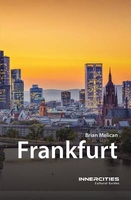
Frankfurt
Frankfurt is a city that punches well above its weight. Despite its diminutive size--it has fewer than a million inhabitants--it is a financial centre of global importance, named alongside metropolises and capitals such as Tokyo, London, and New York. Yet Frankfurt is a city that is also continually underestimated: many of the millions who visit it on business--both German and from other countries--see little more of it than its airport and its skyscrapers. The city`s role in the global financial markets often obscures its importance as a historical and cultural centre, not just for Germany, but for Europe and the West as a whole. In the Middle Ages, Frankfurt was the city in which the Holy Roman Emperors were crowned and in which, at the dawn of the Renaissance, a tradition of
printing and publishing was established which lives on in today`s Frankfurt Book Fair. The German language`s most enduring author, Johann Wolfgang von Goethe, was born in the city, and the university named for him gave birth to one of the twentieth century`s most revolutionary academic developments, the Frankfurt School.Architecturally, too, the city has always been a pioneer: its famous skyline is only the latest and most visible in a series of bold experiments.Frankfurt has always been a capital without a country: the capital of the book trade, the capital of modern social studies, the capital of the Eurozone. Today, it rivals Brussels, Berlin, Paris, and London, and yet retains a deeply provincial, down-to-earth identity interwoven with the thick forests and farming
country of its Hessian hinterland. While its population is one of the world`s most international, its dialect is one of Germany`s most impenetrable. For those looking to do more than just change flights or sign a contract, this cultural guide takes a closer look at Frankfurt, exploring and explaining these dichotomies.
printing and publishing was established which lives on in today`s Frankfurt Book Fair. The German language`s most enduring author, Johann Wolfgang von Goethe, was born in the city, and the university named for him gave birth to one of the twentieth century`s most revolutionary academic developments, the Frankfurt School.Architecturally, too, the city has always been a pioneer: its famous skyline is only the latest and most visible in a series of bold experiments.Frankfurt has always been a capital without a country: the capital of the book trade, the capital of modern social studies, the capital of the Eurozone. Today, it rivals Brussels, Berlin, Paris, and London, and yet retains a deeply provincial, down-to-earth identity interwoven with the thick forests and farming
country of its Hessian hinterland. While its population is one of the world`s most international, its dialect is one of Germany`s most impenetrable. For those looking to do more than just change flights or sign a contract, this cultural guide takes a closer look at Frankfurt, exploring and explaining these dichotomies.

Product Description
Reviews/Comments
Add New
Vouchers
No voucher codes found.
Do you know a voucher code for this product or supplier? Add it to Insights for others to use.
Do you know a voucher code for this product or supplier? Add it to Insights for others to use.
 Denmark