

 United Kingdom
 France
 Germany
 Netherlands
 Sweden
 USA
USA
 Italy
Italy
 Spain
Spain

More From Contributor




Flying Carpet
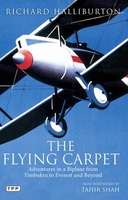
`I`ve just given myself an airplane and I want you to fly us to all the outlandish places in the world, Turkey, Persia, Paris and - Pasadena. We`re going to fly across deserts, over mountains, rescue imprisoned princesses and fight dragons. We must have the world. We can have the world!` Thirsting for a new adventure and announcing that `an adventure not in the air is obsolete`, Richard Halliburton hired pioneer aviator Moye Stephens in 1931 and fearlessly set out to circle the world in an open cockpit biplane optimistically named The Flying Carpet. For Halliburton it was the ultimate in romantic, risky exploration and was a means of seeing the world in a way that few had ever seen it before. True to form, his journey was breathtakingly audacious. They performed aerobatics in Fez,
landed in mysterious Timbuktu, spent time with the French Foreign Legion in Algeria and explored Cairo, Damascus and Petra. In Iran, they met legendary aviatrix Ella Beinhorn and gave Princess Mahin Banu a ride. In Iraq, it was the turn of King Faisal`s young son, Ghazi, who was escorted by two RAF fighter planes.In India, they flew over the Taj Mahal - upside down - and, soaring over the Himalayas, Halliburton took the first aerial photograph of Everest. In Borneo they were entertained by Sylvia Brooke, the `White Queen of Borneo`, and by the chief of the Iban Dyak headhunters, who gave them dozens of shrunken heads. A journey as dazzling as Halliburton himself and, with the world at war less than a decade later, marking the end of an era, the story of The Flying Carpet is
as captivating today as it was to the world 80 years ago.
landed in mysterious Timbuktu, spent time with the French Foreign Legion in Algeria and explored Cairo, Damascus and Petra. In Iran, they met legendary aviatrix Ella Beinhorn and gave Princess Mahin Banu a ride. In Iraq, it was the turn of King Faisal`s young son, Ghazi, who was escorted by two RAF fighter planes.In India, they flew over the Taj Mahal - upside down - and, soaring over the Himalayas, Halliburton took the first aerial photograph of Everest. In Borneo they were entertained by Sylvia Brooke, the `White Queen of Borneo`, and by the chief of the Iban Dyak headhunters, who gave them dozens of shrunken heads. A journey as dazzling as Halliburton himself and, with the world at war less than a decade later, marking the end of an era, the story of The Flying Carpet is
as captivating today as it was to the world 80 years ago.

Product Description
Reviews/Comments
Add New
Vouchers
No voucher codes found.
Do you know a voucher code for this product or supplier? Add it to Insights for others to use.
Do you know a voucher code for this product or supplier? Add it to Insights for others to use.
 Denmark