

 United Kingdom
 France
 Germany
 Netherlands
 Sweden
 USA
USA
 Italy
Italy
 Spain
Spain

More From Contributor

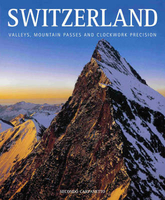
Switzerland
From the middle of the 18th century onward, Switzerland was a compulsory port of call for the cultured traveller. Artists and travellers competed with each other to portray its remarkable mountain landscapes, interwoven in heroic, silent atmospheres of damp woods, alternating with roaring waterfalls. Still it is not too late to encounter the same emotions, if you travel along the Jungfrau railway line - the highest in Europe - and stop off every so often to see the broad sweep of Switzerland from the dizzying tunnels high up in the mountains. On a clear day, you can see right down the valleys into the Black Forest and the Vosges and, on arrival, look up to the majestic summits of the Jungfrau, Monch and Eiger. Among Europe`s highest mountains, there is a medieval Switzerland,
austere and gothic, such as we can see in Chillon Castle, clinging to a rocky islet in the waters of Lake Geneva, with its labyrinth of halls and chimneys, and the paintings evoking the lives of the knights of old times.Then there is the Switzerland of the 18th century, the land of Baden, the most elegant of spas, where politics and frivolity came together in the elevated world of the Swiss and German aristocracy. The country of mountains, cheese, chocolate and clocks is, in fact, the most ancient and cosmopolitan country in Europe, a position it was able to achieve after a painful past, and now proudly guarded and preserved even in these days of economic and industrial progress.
austere and gothic, such as we can see in Chillon Castle, clinging to a rocky islet in the waters of Lake Geneva, with its labyrinth of halls and chimneys, and the paintings evoking the lives of the knights of old times.Then there is the Switzerland of the 18th century, the land of Baden, the most elegant of spas, where politics and frivolity came together in the elevated world of the Swiss and German aristocracy. The country of mountains, cheese, chocolate and clocks is, in fact, the most ancient and cosmopolitan country in Europe, a position it was able to achieve after a painful past, and now proudly guarded and preserved even in these days of economic and industrial progress.

Product Description
Reviews/Comments
Add New
Vouchers
No voucher codes found.
Do you know a voucher code for this product or supplier? Add it to Insights for others to use.
Do you know a voucher code for this product or supplier? Add it to Insights for others to use.
 Denmark